

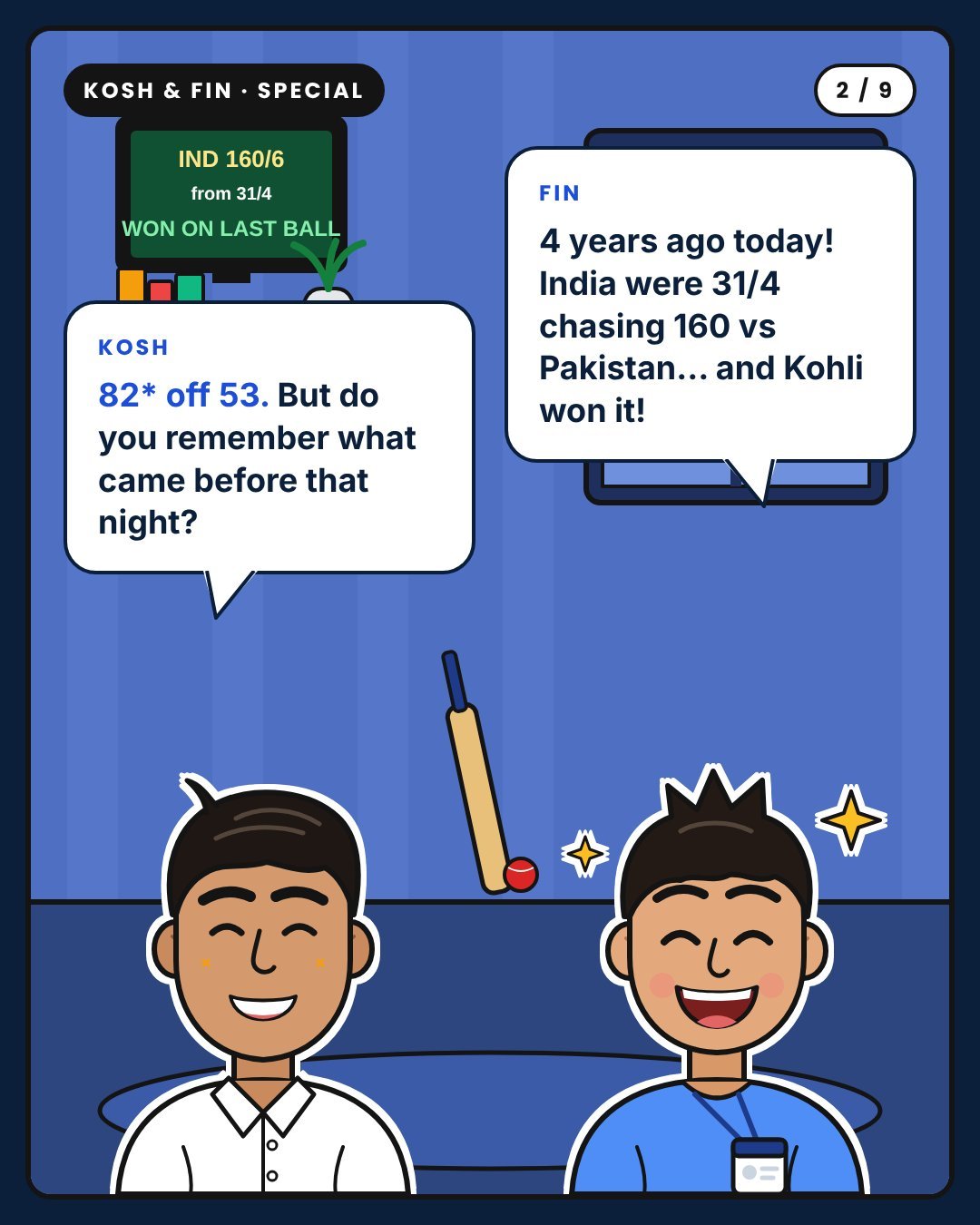
Four years ago, on 23 October 2022, India were 31/4 chasing 160 against Pakistan at the MCG, and Virat Kohli’s unbeaten 82 off 53 took them home on the last ball. In this special, Kosh and Fin look at what that night, and the long slump before it, can teach us about money.



Swipe or use the arrows
The slump before the night
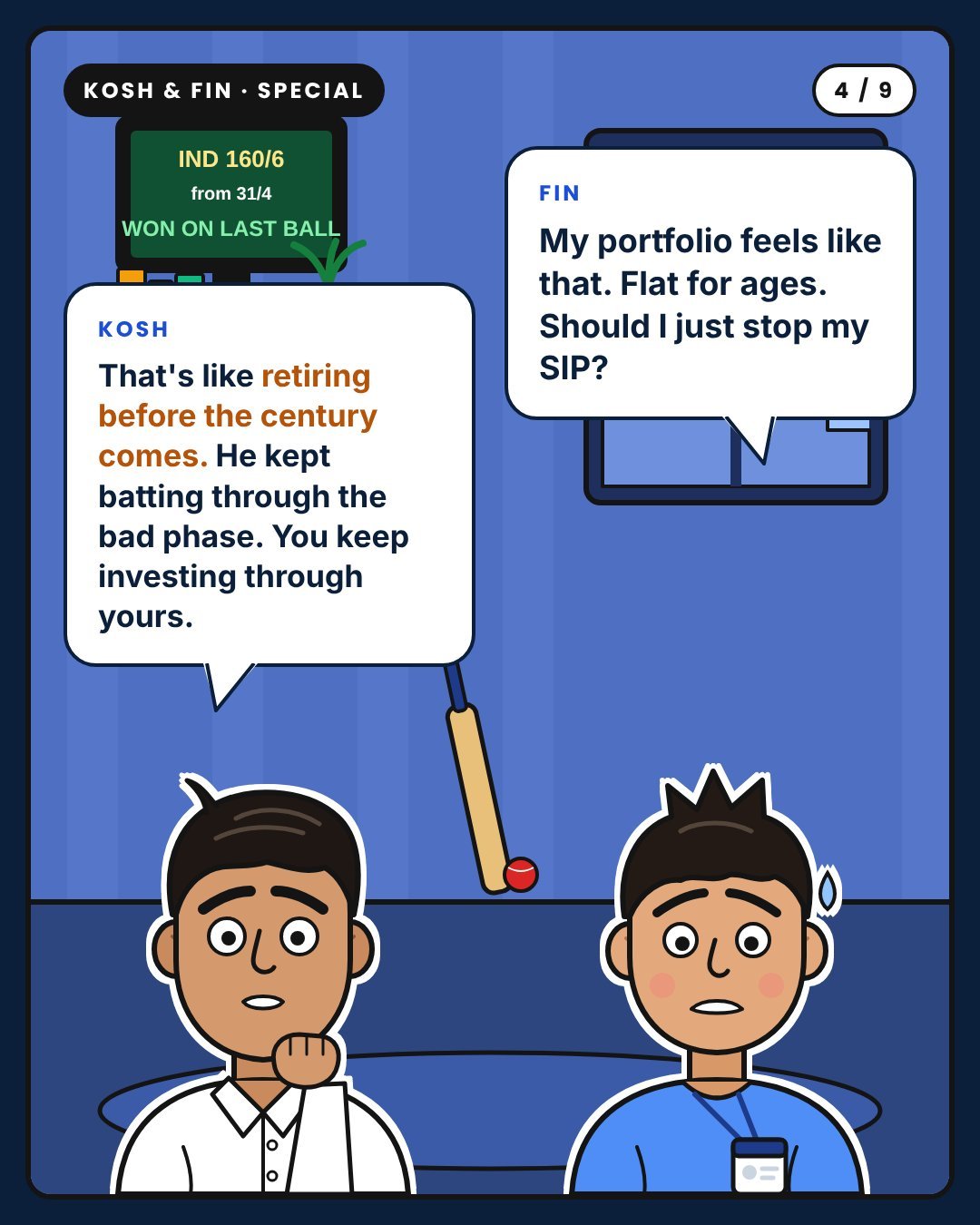
Before that match, Kohli had gone nearly three years without an international century, more than 1,000 days of people saying he was finished. He kept batting through the bad phase. That’s the first lesson: don’t retire before the century comes.
Lesson 1: keep your SIP going when markets are flat
When prices are down, the same SIP buys more units. ₹5,000 at a price of ₹50 buys 100 units; at ₹40 it buys 125. Those extra units are what power returns when markets recover.
Lesson 2: don’t walk off the pitch in a crash
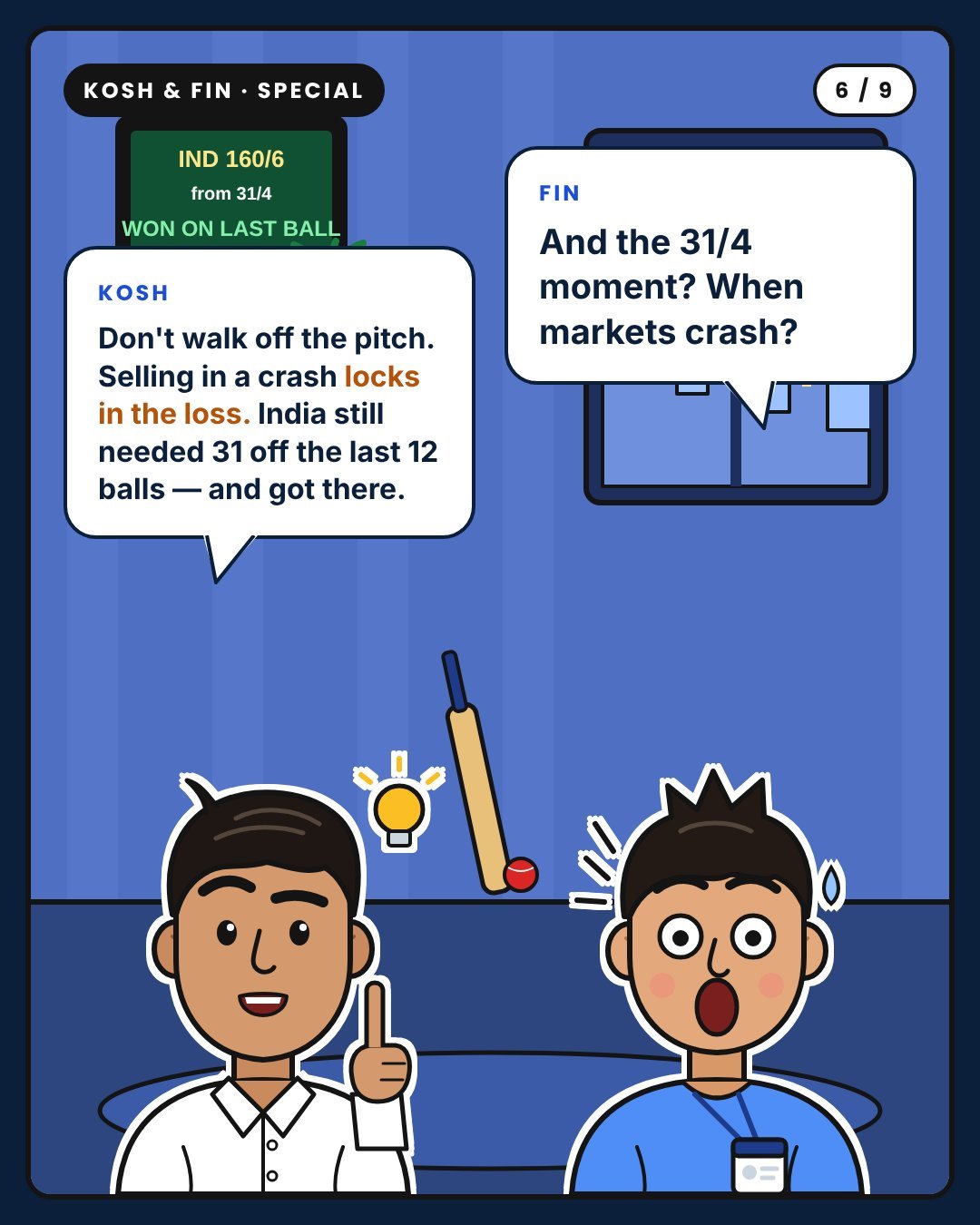
At 31/4, the chase looked lost. India still needed 31 off the last 12 balls, and got there. Selling in a market crash locks in the loss; staying in gives you a chance to recover.
Lesson 3: know your required run rate
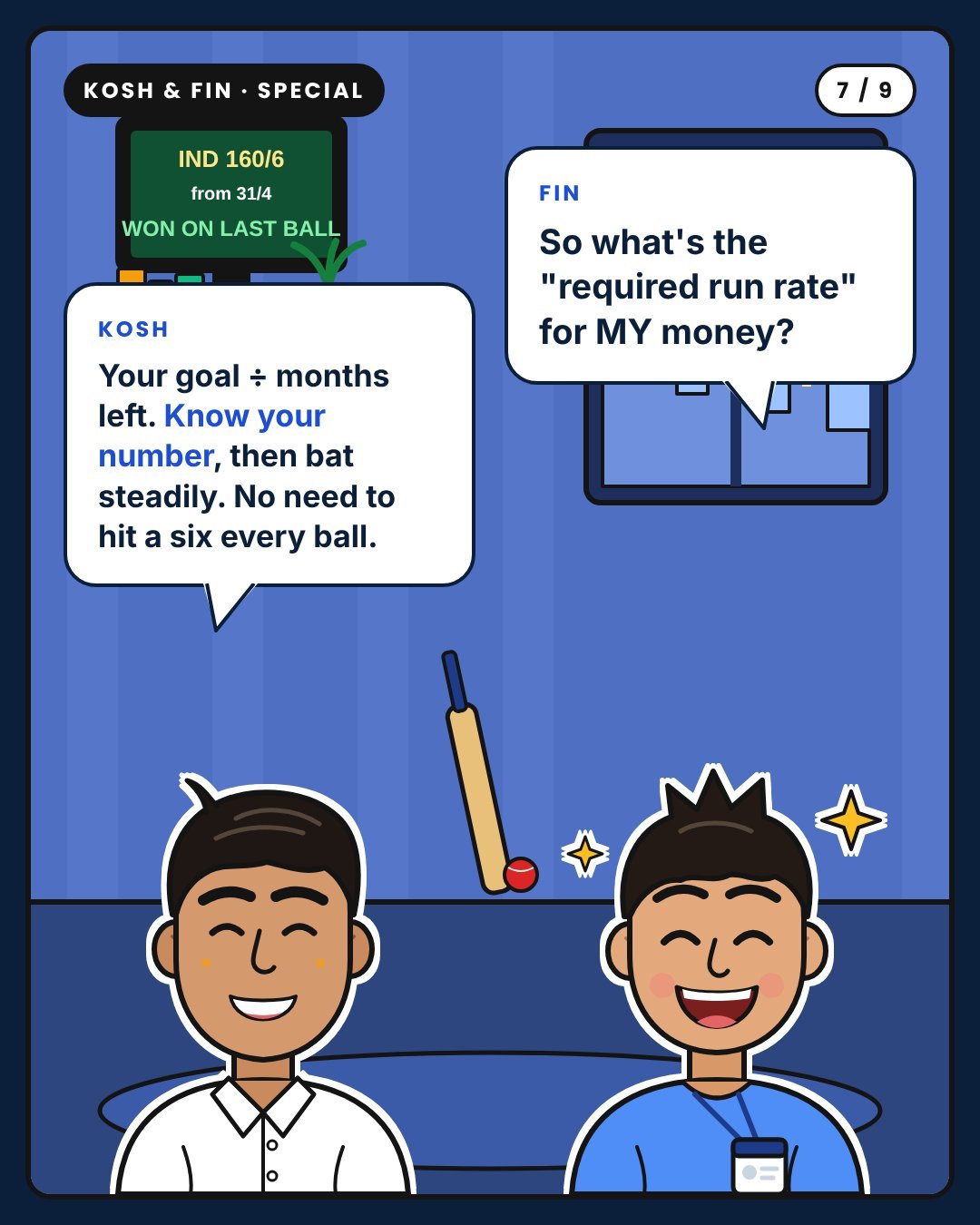
Divide your goal by the months you have left. That’s your number. Then bat steadily: you don’t need to hit a six every ball. Our savings calculator helps you to work out what you need each month.
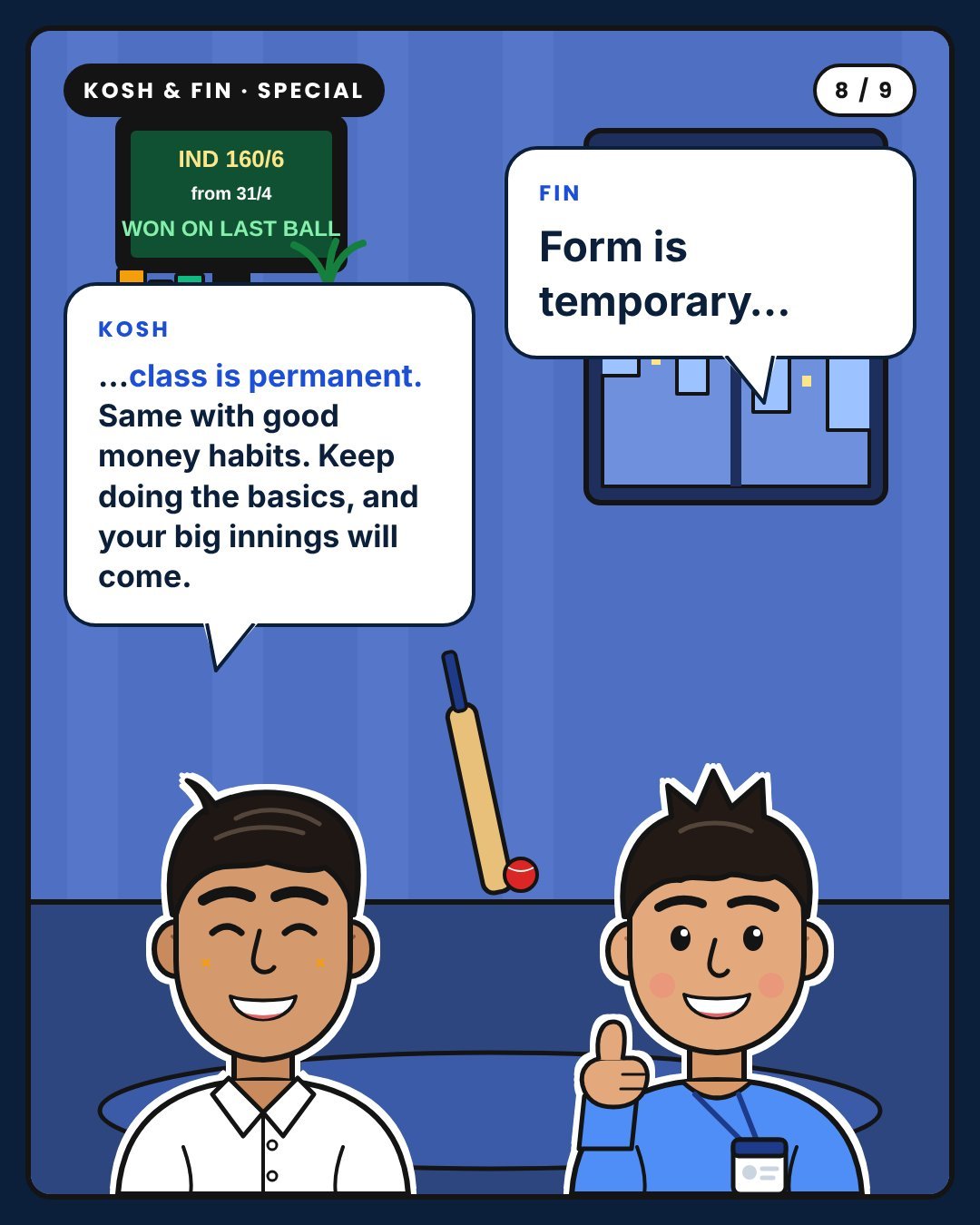
Lesson 4: form is temporary, class is permanent
The same goes for money habits. Keep doing the basics, and your big innings will come.
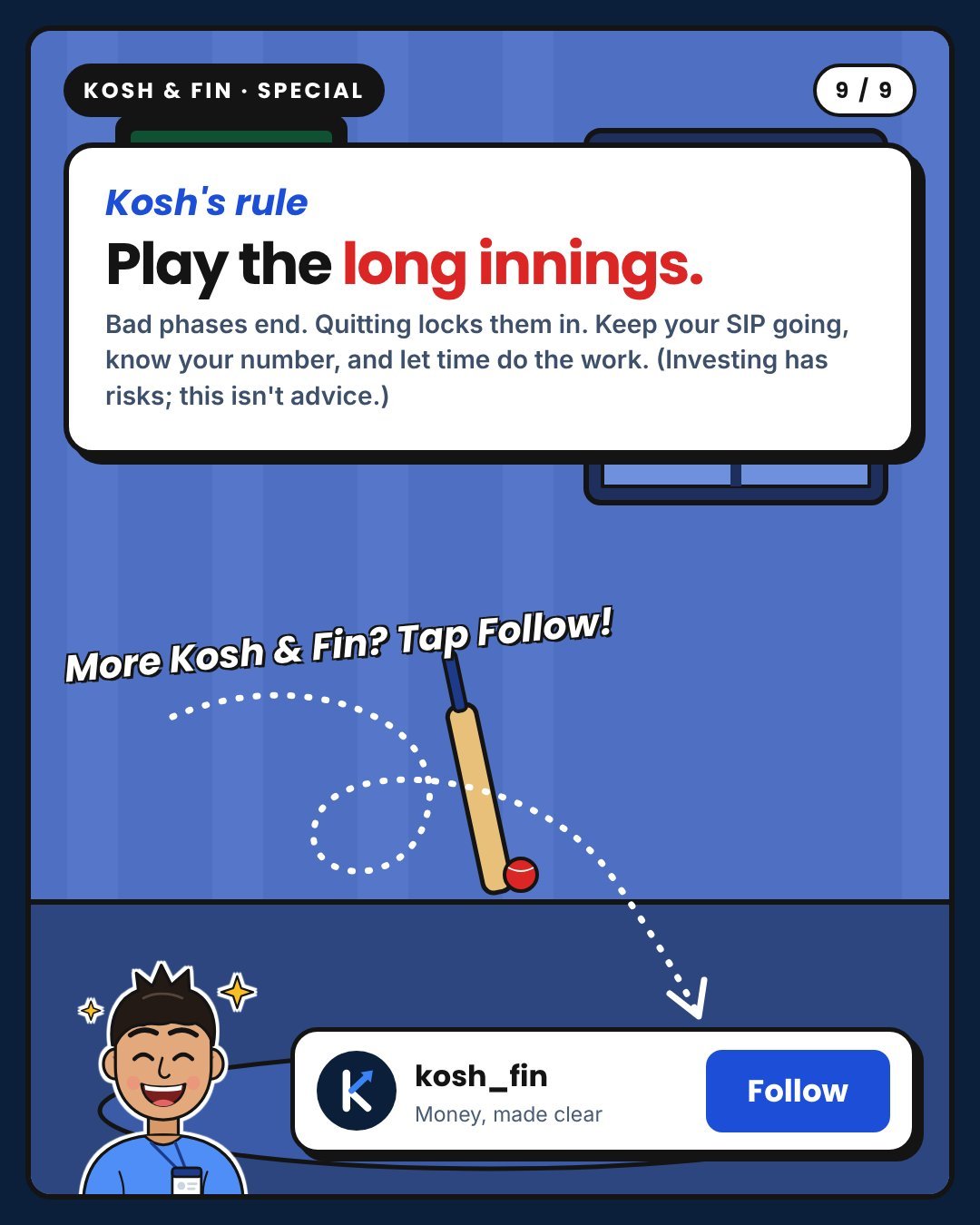
Bad phases end. Quitting locks them in. Keep your SIP going, know your number, and let time do the work. (Investing has risks; this isn’t advice.)
Frequently asked questions
Should I stop my SIP when markets fall?
Historically, continuing SIPs during falls has let investors buy more units at lower prices. Stopping can lock in losses. Your own goals and risk appetite should guide the decision.
Part of our Kosh & Fin visual stories. New ones every week on Instagram: @kosh_fin