

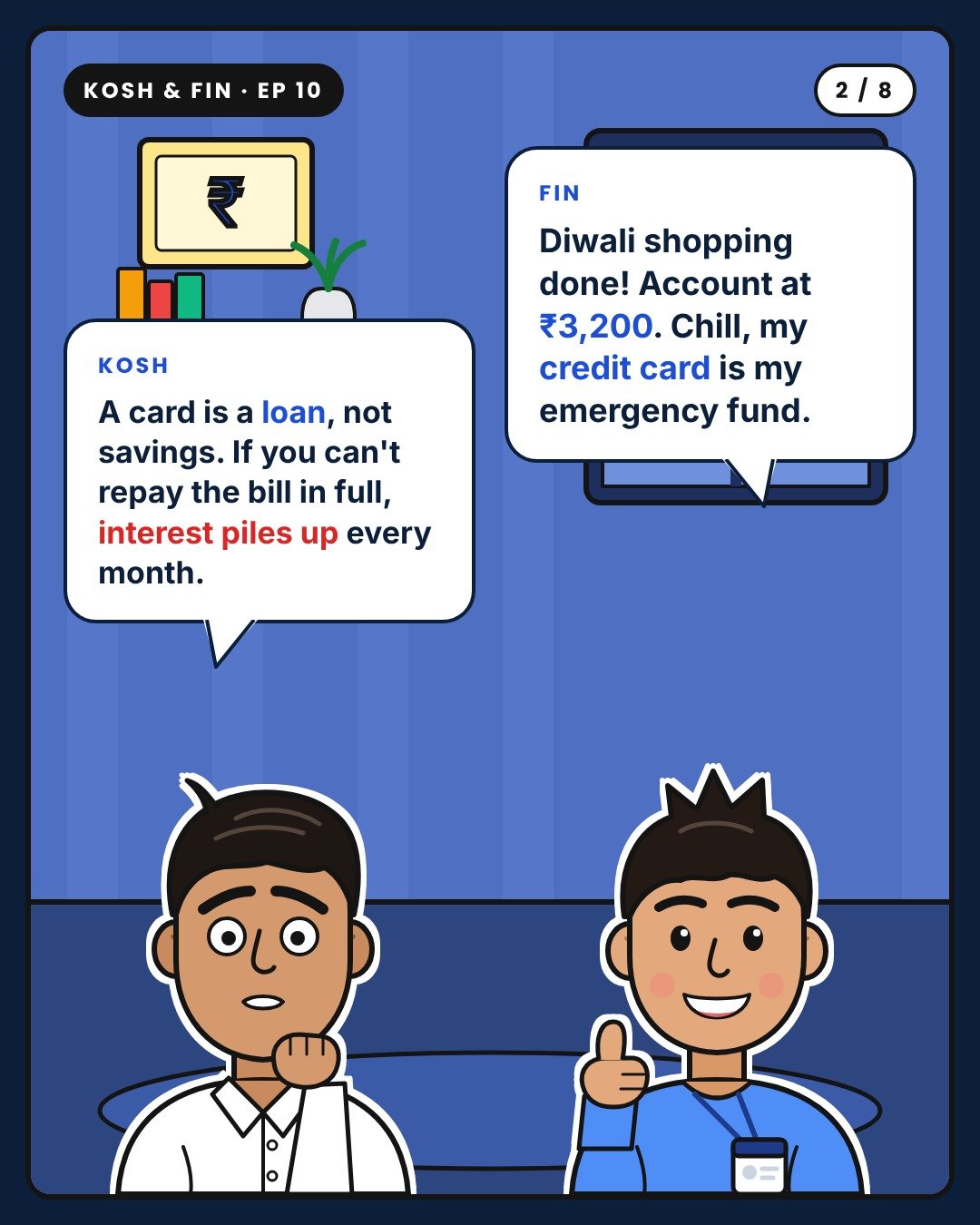
After the festive season, Fin’s account is down to ₹3,200 and he says his credit card is his emergency fund. Kosh explains why a card is not a cushion, how much a real emergency fund should be, how to build it a little at a time, and where to keep it. Swipe through the comic, then read the full breakdown.
Swipe or use the arrows
Why Fin’s credit card is not an emergency fund
After the festive season, plenty of first-jobbers look at a near-empty account and think, “The card will cover it.” But a credit card is a loan. If you can’t pay the full bill by the due date, interest is charged on what’s left, and it keeps adding up every month. An emergency fund is your own money, ready when something goes wrong, with nothing to pay back.
What counts as an emergency?
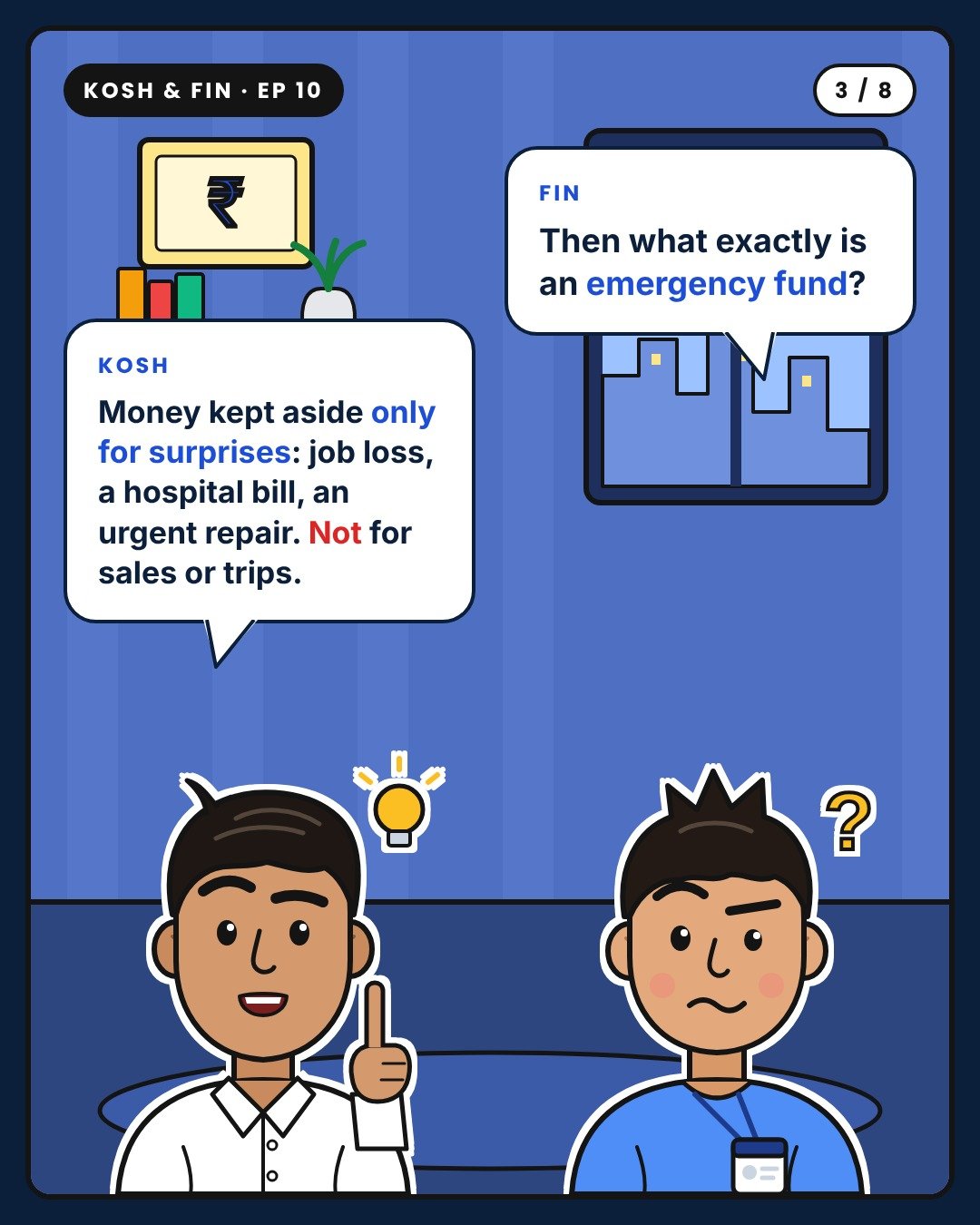
Money kept aside only for surprises you can’t plan for:
- Job loss or a pay gap while you look for the next role
- A medical bill that insurance doesn’t fully cover
- An urgent repair: your bike, your phone for work, a broken appliance at home
- A family emergency that needs you to travel at short notice
A sale, a new phone you want, or a trip is not an emergency. Those get their own savings goal.
Step 1: add up your monthly essentials
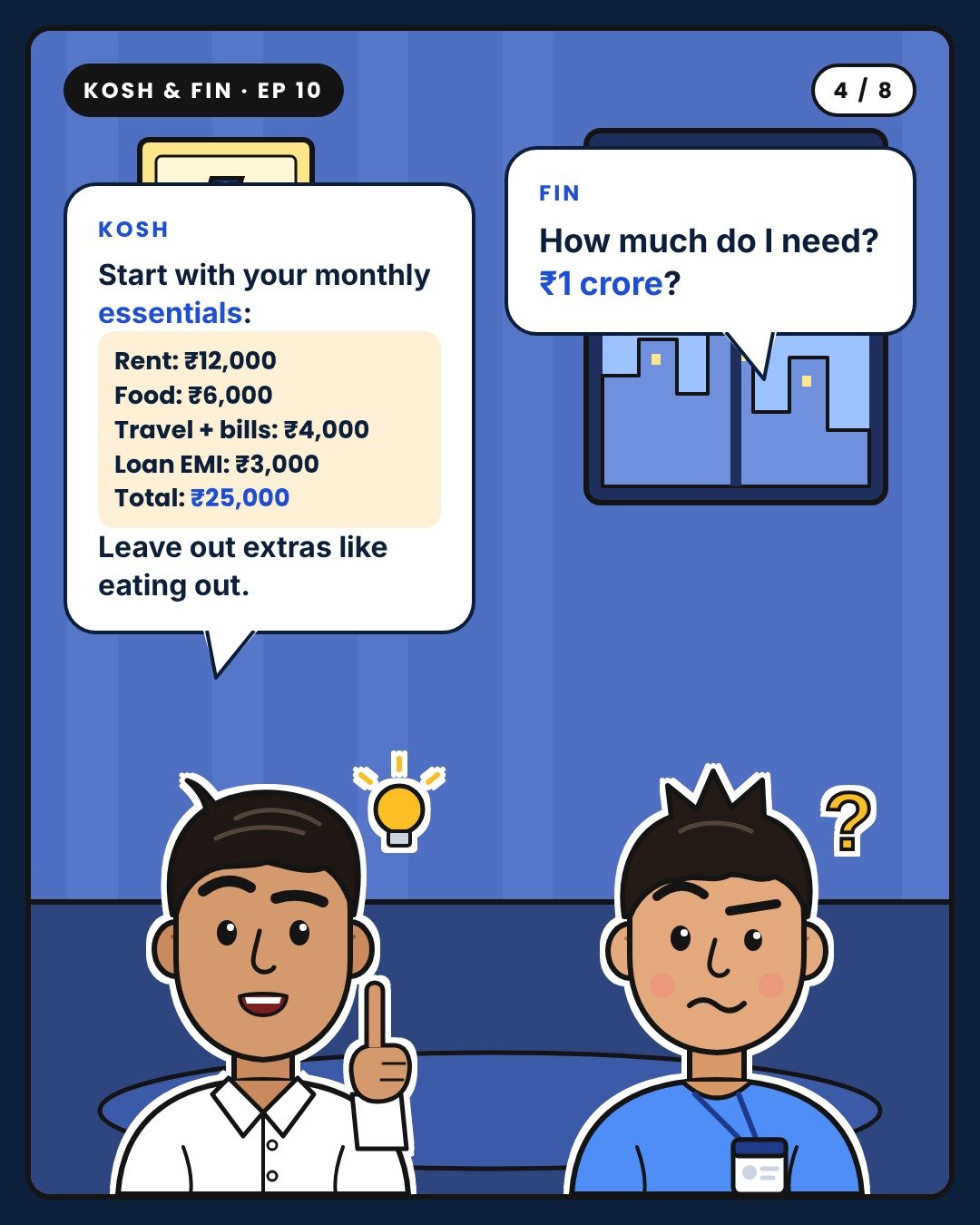
Count only what you must pay even in a bad month. Leave out extras like eating out and shopping. Fin’s numbers:
| Essential | Per month |
|---|---|
| Rent | ₹12,000 |
| Food and groceries | ₹6,000 |
| Travel, phone and bills | ₹4,000 |
| Loan EMI | ₹3,000 |
| Total essentials | ₹25,000 |
Step 2: pick 3 to 6 months
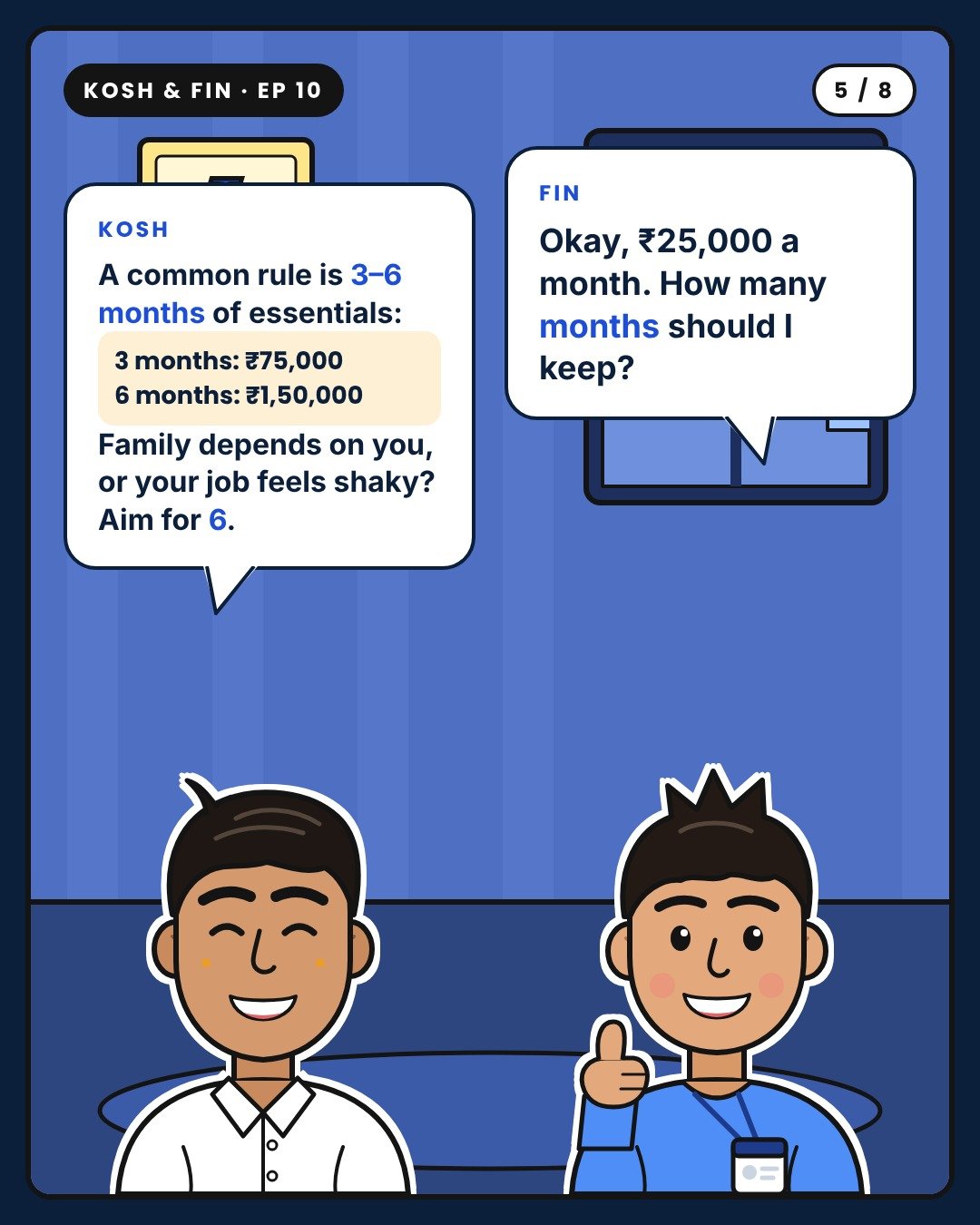
A common rule of thumb is to keep 3 to 6 months of essential expenses. For Fin that is:
| Cover | Amount |
|---|---|
| 1 month (first milestone) | ₹25,000 |
| 3 months | ₹75,000 |
| 6 months | ₹1,50,000 |
Aim nearer 6 months if your family depends on your income, you are the only earner, your income varies, or your job feels shaky. A single person with a stable job and few fixed costs can start with 3.
Step 3: build it automatically
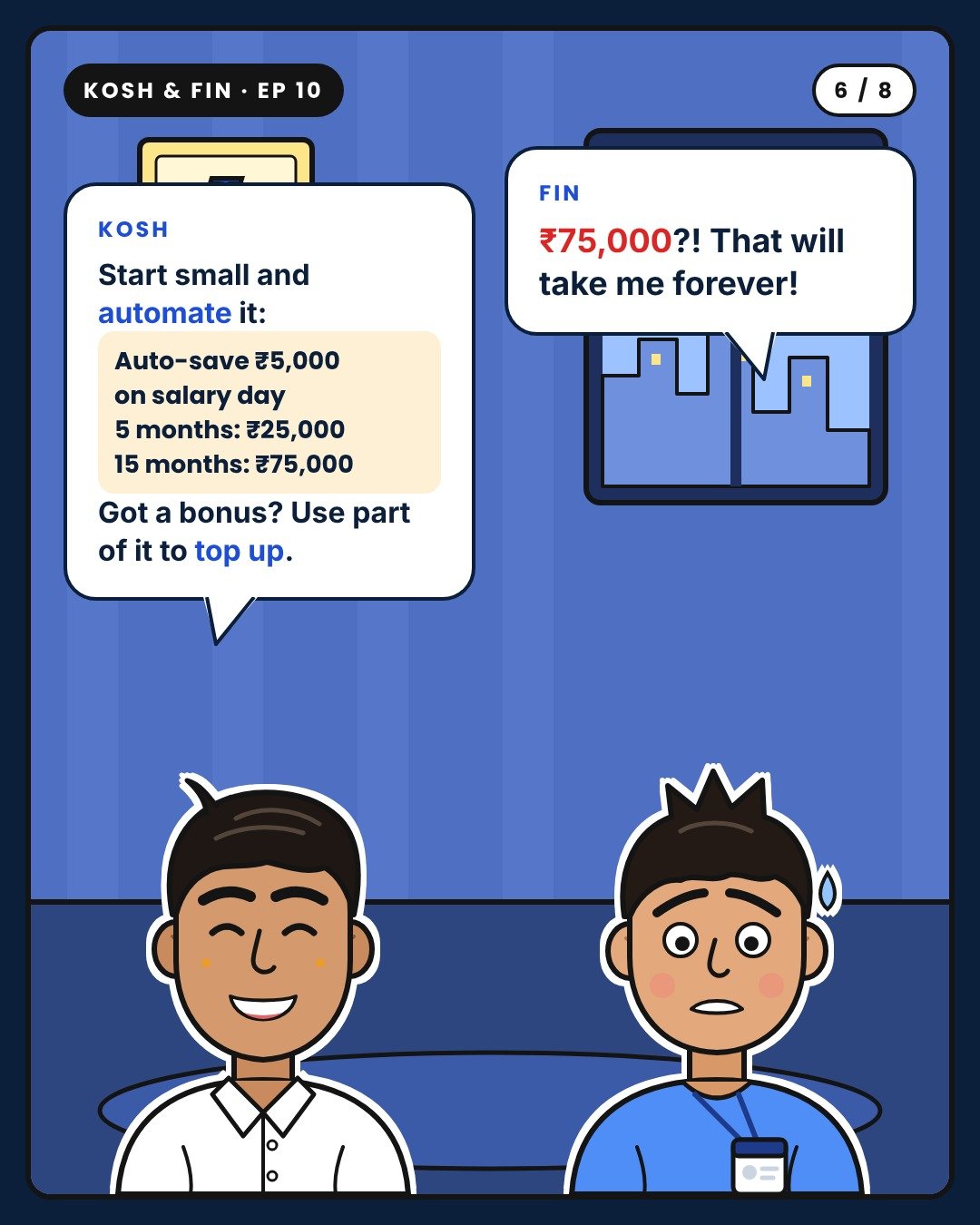
₹75,000 sounds like a lot, so don’t do it in one go. Set an automatic transfer of a fixed amount on salary day, before you start spending. At ₹5,000 a month, Fin reaches 1 month of cover in 5 months and 3 months of cover in 15 months. A bonus, a refund or a gift? Put part of it in to get there faster.
Step 4: park it somewhere safe and quick to reach
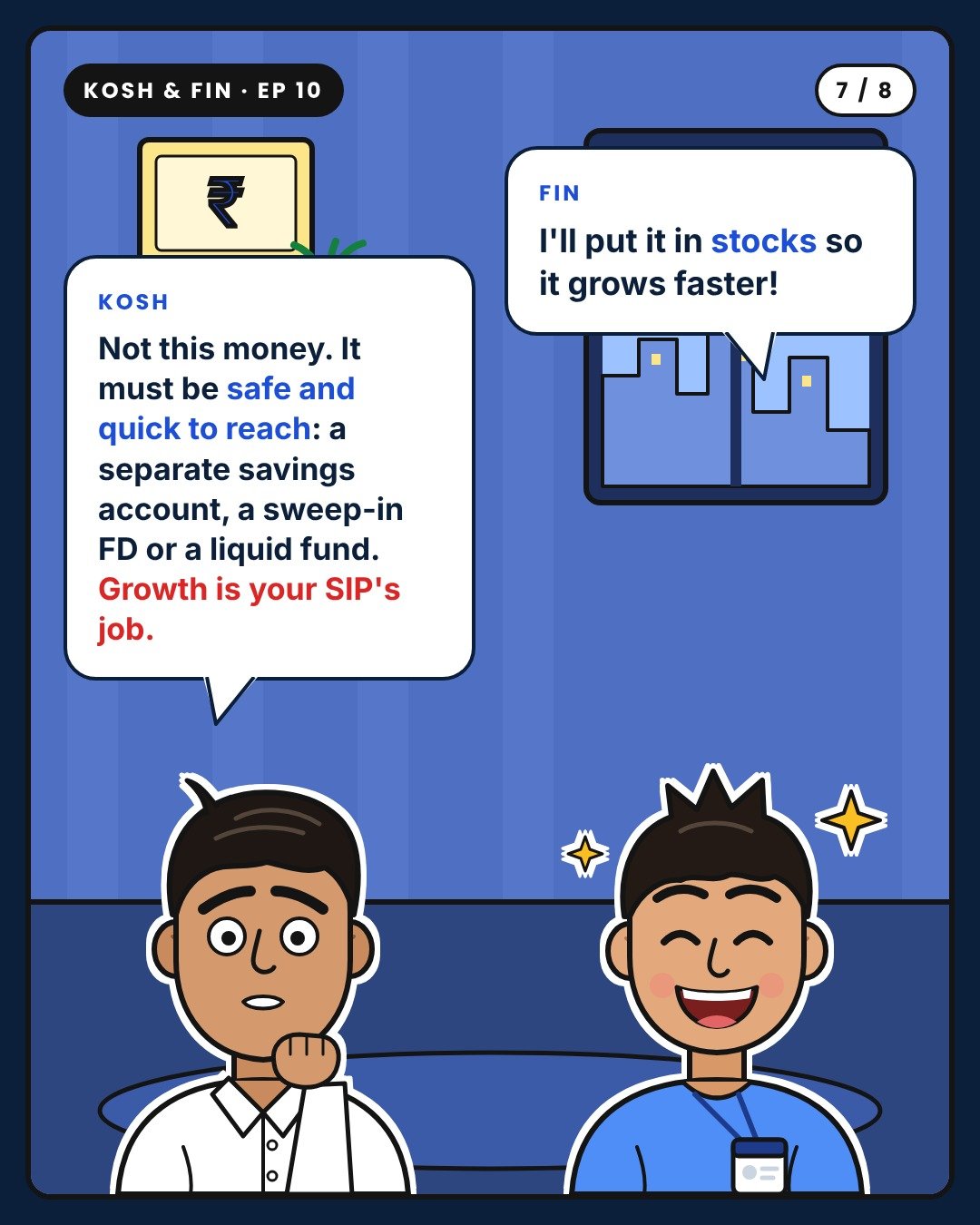
This money’s job is to be there on a bad day, not to grow fast. Common choices:
- A separate savings account, so it doesn’t get mixed with spending money
- A sweep-in FD linked to your savings account: extra money sits in an FD but can be pulled back when needed
- A liquid mutual fund, which invests in very short-term debt; withdrawals usually reach your bank in about a working day
Keep stocks and equity funds for long-term goals through your SIP. And once you use the emergency fund, refill it before your next big want.
Keep 3–6 months of essential expenses somewhere safe and separate. Use it only for real emergencies, then refill it.
Try your own numbers in our calculator.
Related reads: Kosh & Fin Ep 5: Diwali bonus, blow it or grow it, Ep 7: credit score myths and the no-cost EMI trap. Compare savings accounts on Koshfin.
Education, not investment advice.
Frequently asked questions
What is an emergency fund?
An emergency fund is money you keep aside only for unplanned, urgent costs: losing your job, a medical bill, an urgent home or vehicle repair. It is not for sales, gadgets or holidays.
How much should my emergency fund be?
A common rule of thumb is 3 to 6 months of essential expenses. If your essentials are ₹25,000 a month, that is ₹75,000 to ₹1,50,000. Lean towards 6 months if your family depends on your income or your job feels uncertain.
Can my credit card be my emergency fund?
A credit card is borrowed money, not savings. If you can’t repay the full bill by the due date, interest is charged on the unpaid amount and builds up every month. Use savings first; treat the card as a payment tool you repay in full.
Where should I keep my emergency fund?
Somewhere safe and quick to reach: a separate savings account, a sweep-in FD linked to your savings account, or a liquid mutual fund. Avoid stocks or long lock-ins for this money, because you may need it on short notice.
I can only save a little. Is it still worth starting?
Yes. Start with a first target of one month of essentials, set an automatic transfer on salary day, and add part of any bonus. ₹5,000 a month reaches ₹25,000 in 5 months and ₹75,000 in 15 months.
Part of our Kosh & Fin visual stories. New ones every week on Instagram: @kosh_fin