

Fin is about to apply for his first credit card, and he “knows” a lot about CIBIL scores. Most of it is wrong. Kosh busts six common credit score myths with simple ₹ examples. Swipe through the comic, then read the full breakdown.


Swipe or use the arrows
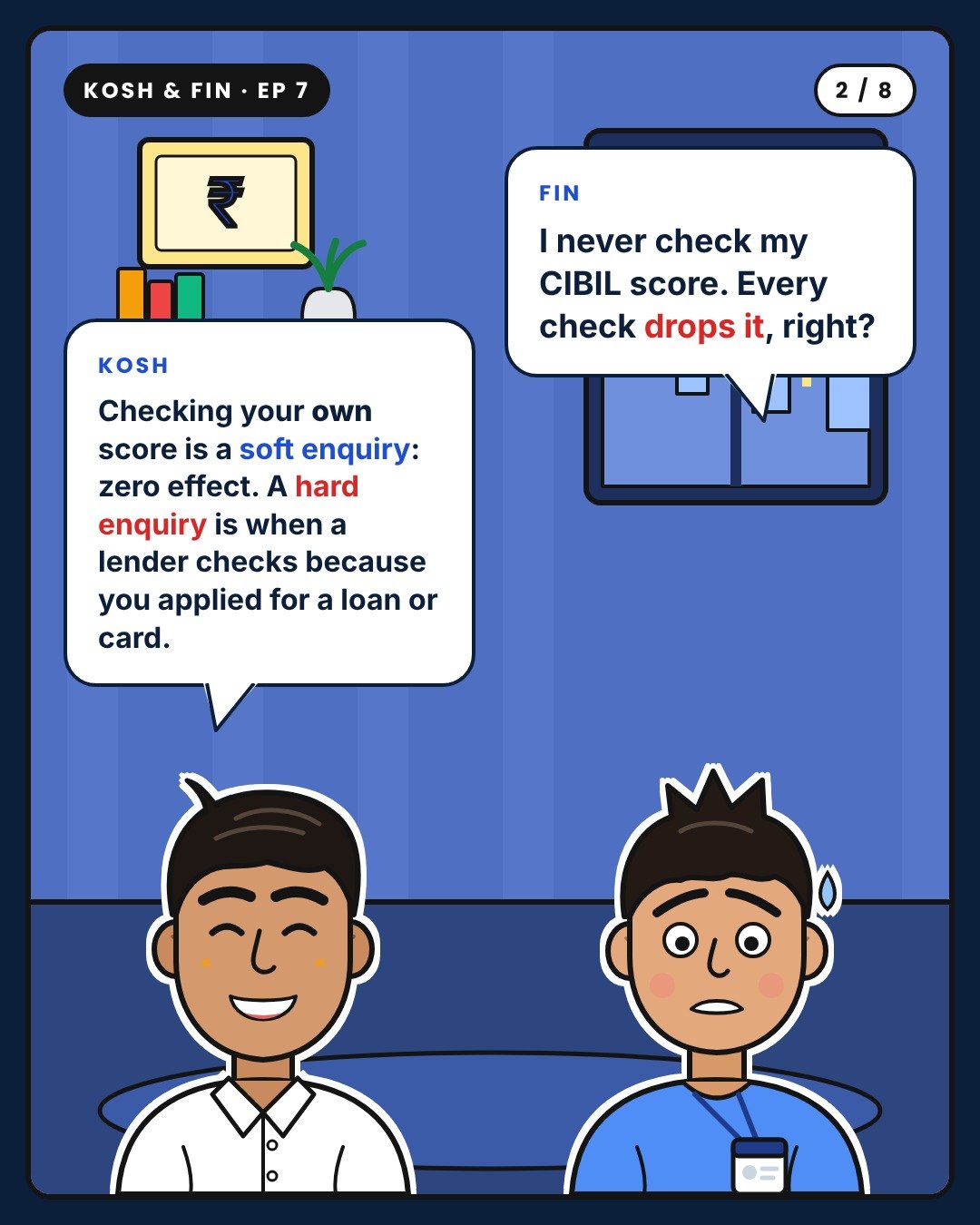
Myth 1: “Checking my score will lower it”
When you check your own credit score, it is a soft enquiry. It has no effect on your score, so check as often as you like. A hard enquiry is different: it happens when a lender pulls your report because you applied for a loan or a credit card.
You can also get one free full credit report a year from each of India’s four credit bureaus: TransUnion CIBIL, Experian, Equifax and CRIF High Mark.
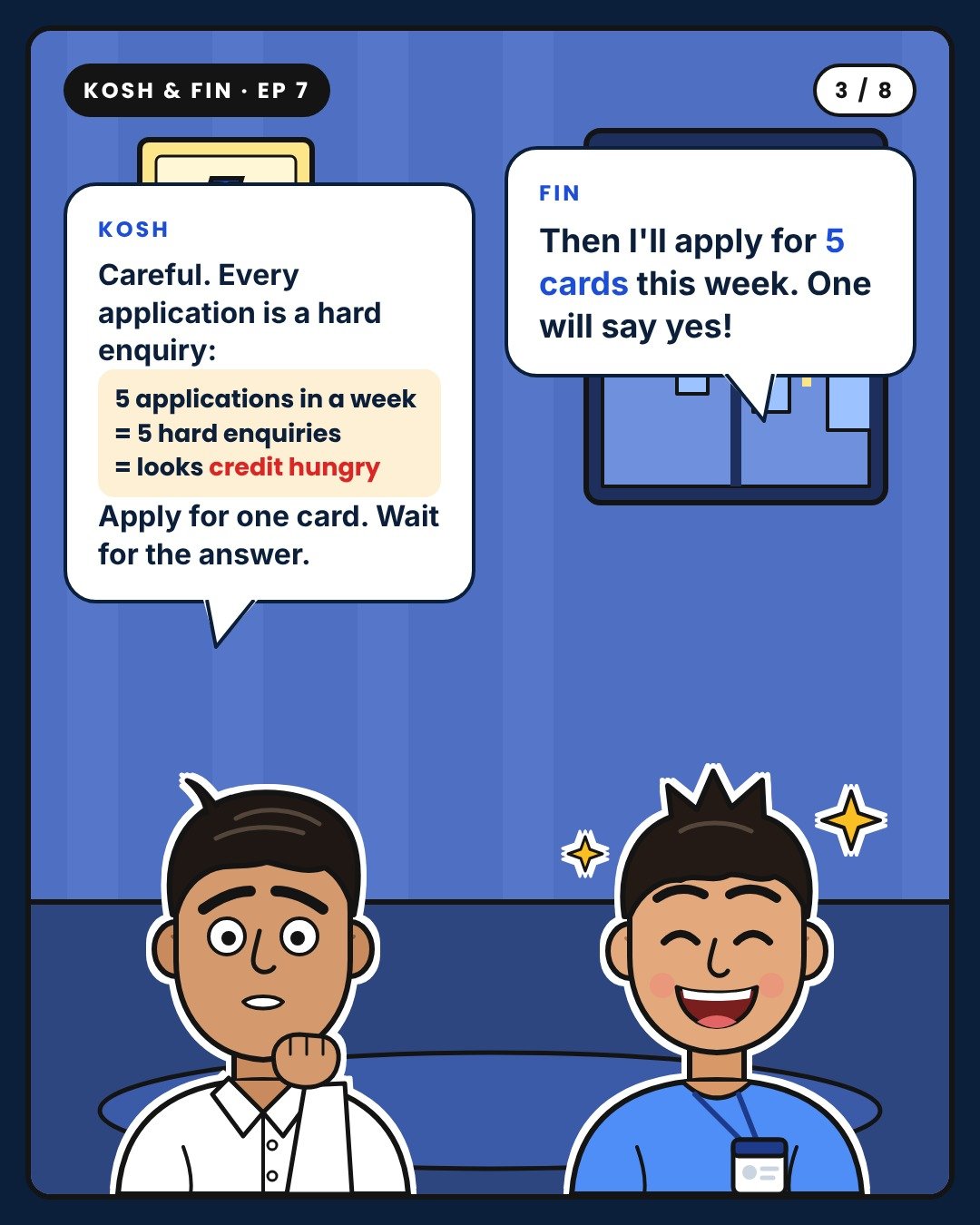
Myth 2: “Applying for lots of cards improves my chances”
Each application usually means a hard enquiry. Five applications in a week means five hard enquiries, and that can make you look credit hungry to the next lender. Shortlist one card that fits how you spend, apply, and wait for the answer before trying another. Our Card Finder can help you shortlist.
Myth 3: “A high salary means a high score”
Your salary isn’t part of your credit score at all. The score is built from your credit history: whether you repay on time, how much of your credit limit you use, how long your history is, your mix of loans and cards, and recent enquiries. Income matters when a lender decides how much to lend you, but that is a separate check.
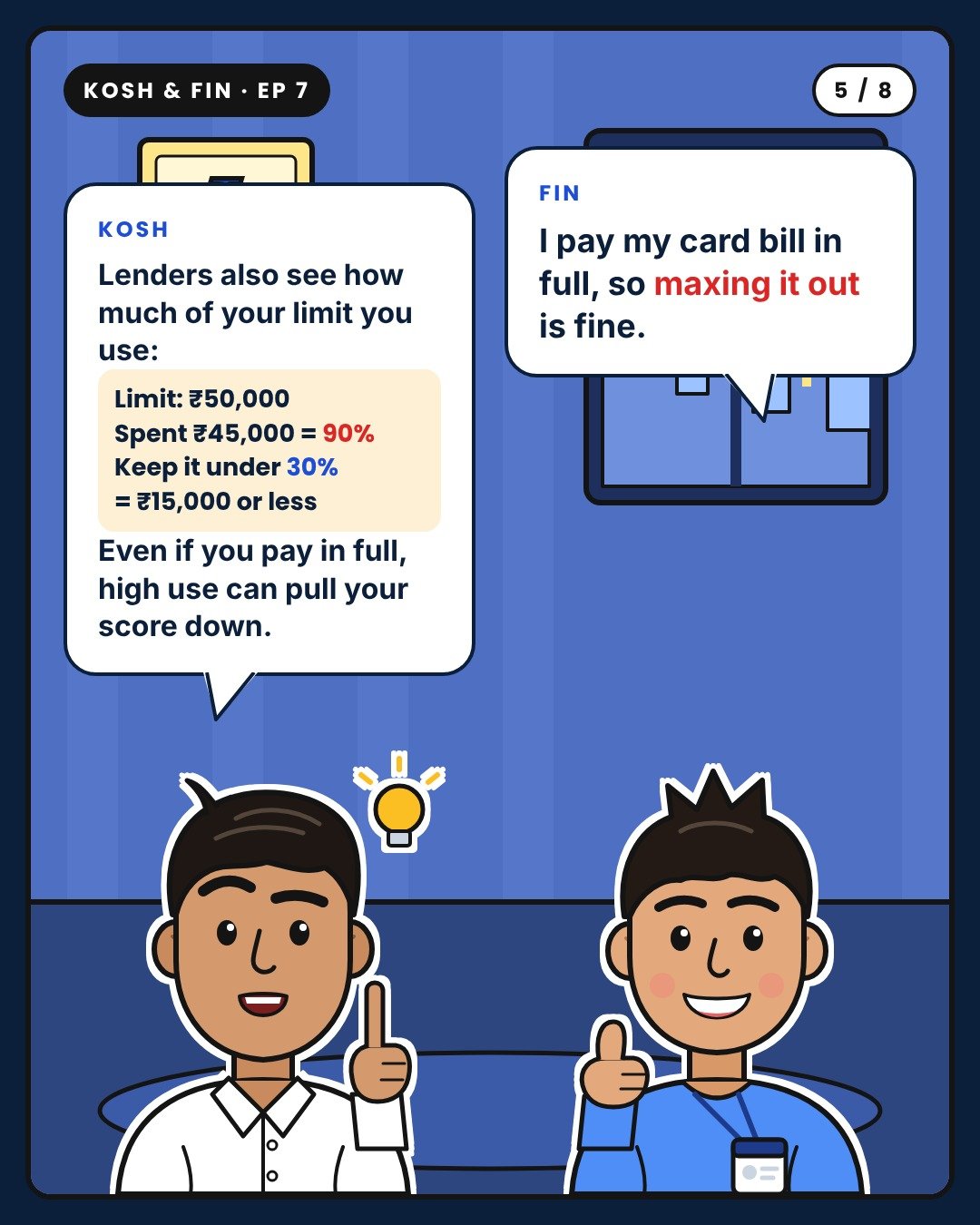
Myth 4: “Maxing out my card is fine if I pay in full”
Lenders also look at how much of your limit you use (your credit utilisation). Even if you pay the full bill, a statement that shows a nearly maxed-out card can pull your score down.
| Card limit | Spent this month | Limit used |
|---|---|---|
| ₹50,000 | ₹45,000 | 90% |
| ₹50,000 | ₹15,000 | 30% |
A common rule of thumb is to keep usage under 30% of your limit. On a ₹50,000 limit, that is ₹15,000 or less.
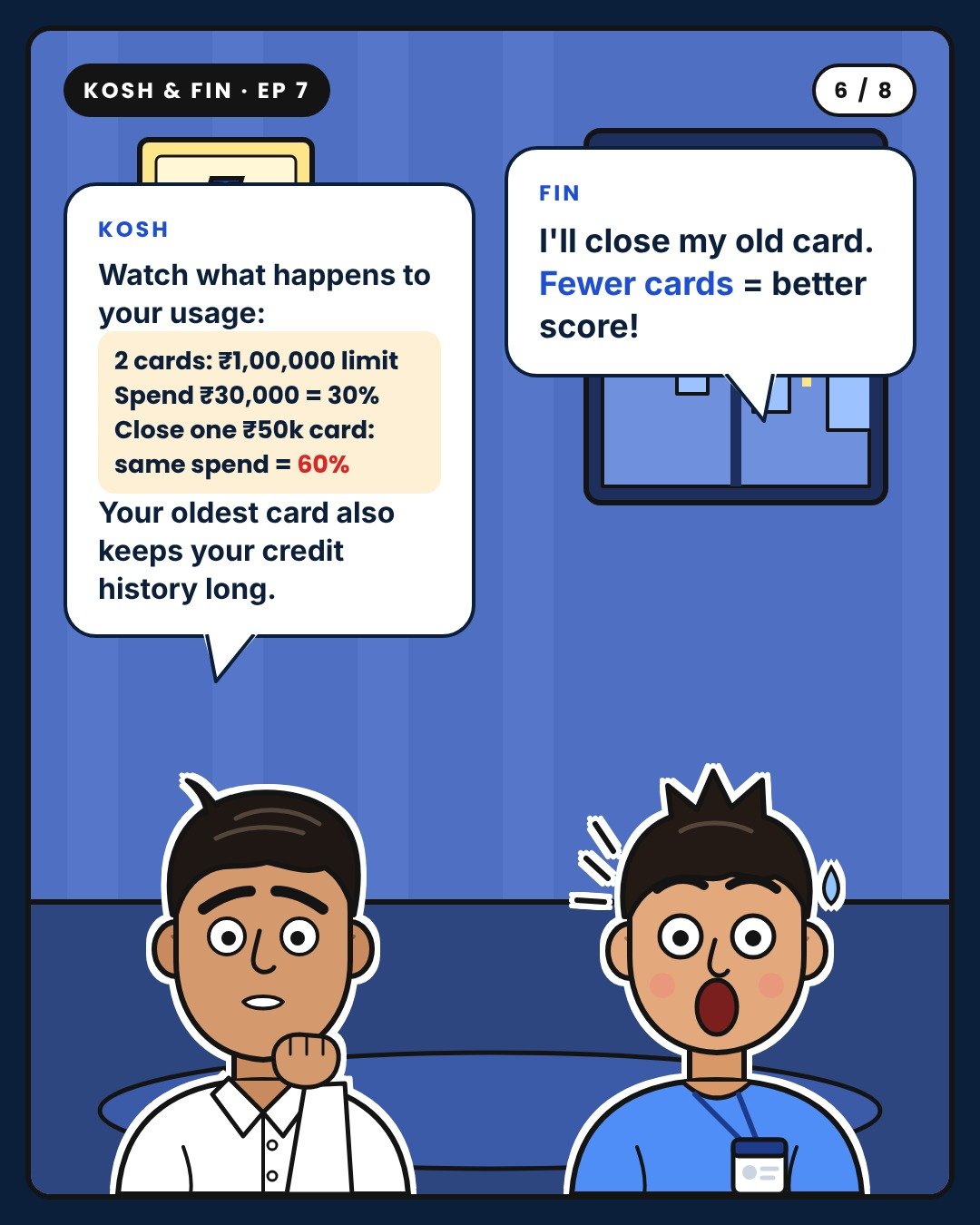
Myth 5: “Closing my old card will boost my score”
Closing a card cuts your total limit, so the same spending suddenly looks bigger:
| Total limit | Monthly spend | Limit used | |
|---|---|---|---|
| Two cards | ₹1,00,000 | ₹30,000 | 30% |
| After closing a ₹50,000 card | ₹50,000 | ₹30,000 | 60% |
If it is your oldest card, closing it can also shorten your credit history. A card with a high annual fee you never use may still be worth closing; just know the trade-off first.
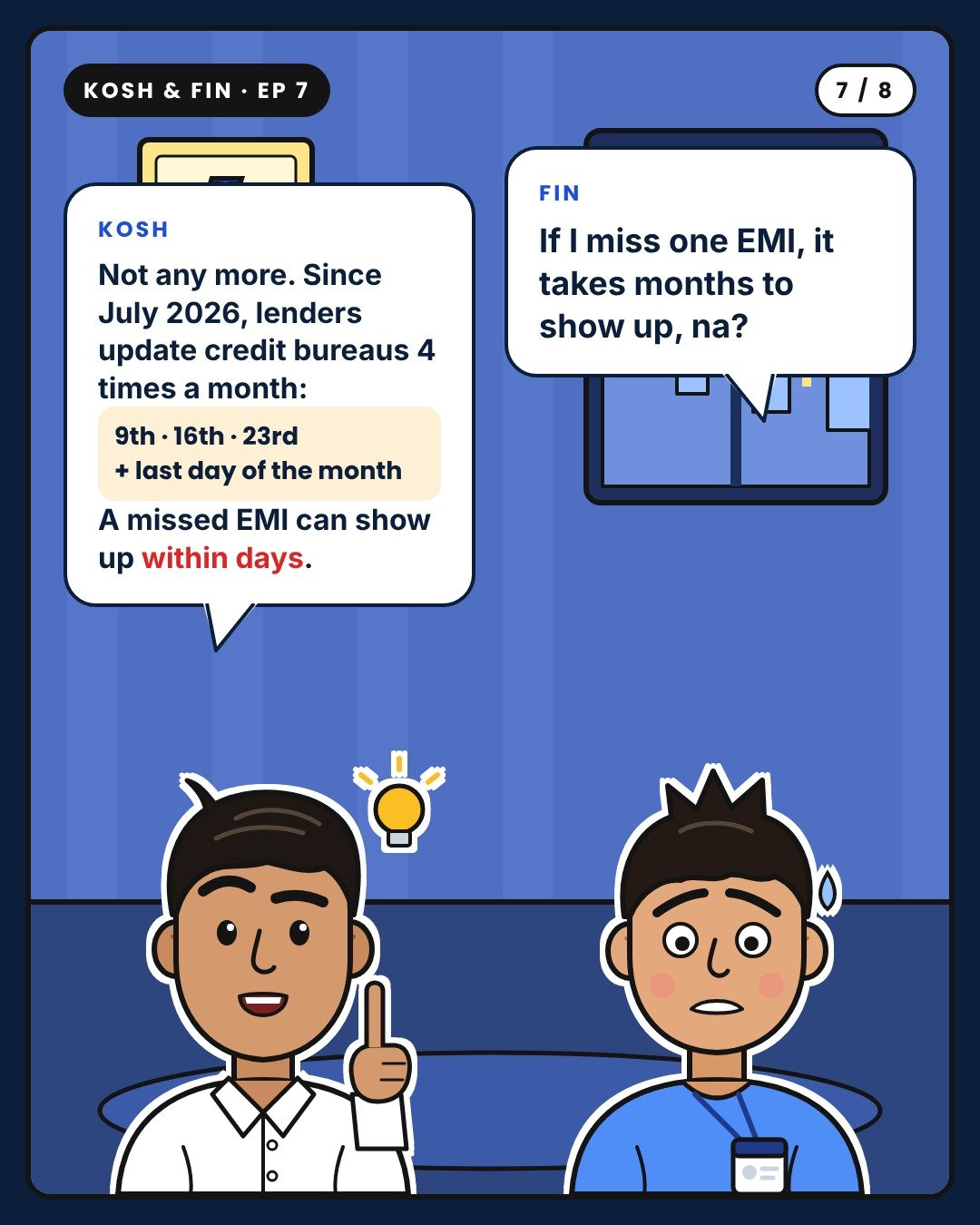
Myth 6: “A missed EMI takes months to show up”
Not any more. From 1 January 2025, lenders had to update credit bureaus every 15 days. Since 1 July 2026, under RBI’s revised rules, they send updates four times a month: as of the 9th, 16th, 23rd and the last day of each month. A missed EMI can reach your report within days. The good news: a loan you close or dues you clear also show up faster.
Spot a wrong entry? Raise a dispute with the bureau. Under RBI’s rules, if your complaint isn’t resolved within 30 days, you’re entitled to compensation of ₹100 for each day of delay.
Rules as of 27 October 2026. Each bureau uses its own scoring model; the examples above are illustrations.
Pay every bill and EMI on time, keep card use under 30% of your limit, and check your free credit report from each bureau once a year. Fix errors early.
Answer a few questions and get a shortlist that fits how you spend.
Compare cards side by side on our comparison page, browse all credit cards, or read Kosh & Fin Ep 4: the no-cost EMI trap.
Frequently asked questions
Does checking my own credit score lower it?
No. Checking your own score is a soft enquiry and has no effect on it. Hard enquiries happen when a lender checks your report because you applied for a loan or credit card.
How often is my credit report updated now?
Since 1 July 2026, under RBI’s revised rules, lenders send updates to credit bureaus four times a month: as of the 9th, 16th, 23rd and the last day of the month. Before that, from 1 January 2025, it was every 15 days.
Can I get my credit report for free?
Yes. You can get one free full credit report a year from each credit bureau: TransUnion CIBIL, Experian, Equifax and CRIF High Mark.
What if my credit report has a mistake?
Raise a dispute with the credit bureau. Under RBI’s rules, if your complaint isn’t resolved within 30 days, you’re entitled to compensation of ₹100 for each day of delay.
What is a good credit score?
Credit scores in India run from 300 to 900, and higher is better. RBI doesn’t set a minimum score for loans; each lender sets its own cut-off.
Part of our Kosh & Fin visual stories. New ones every week on Instagram: @kosh_fin