
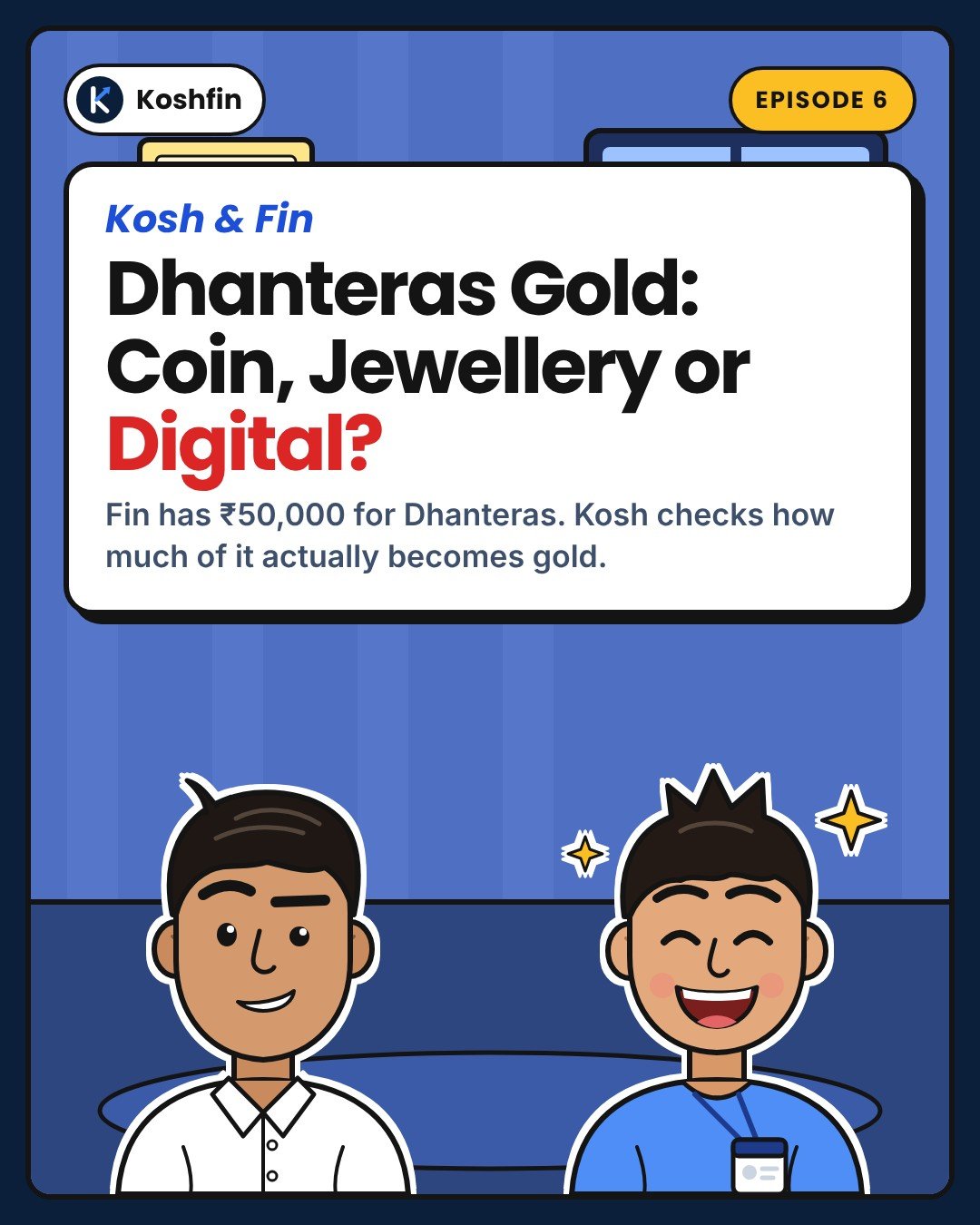
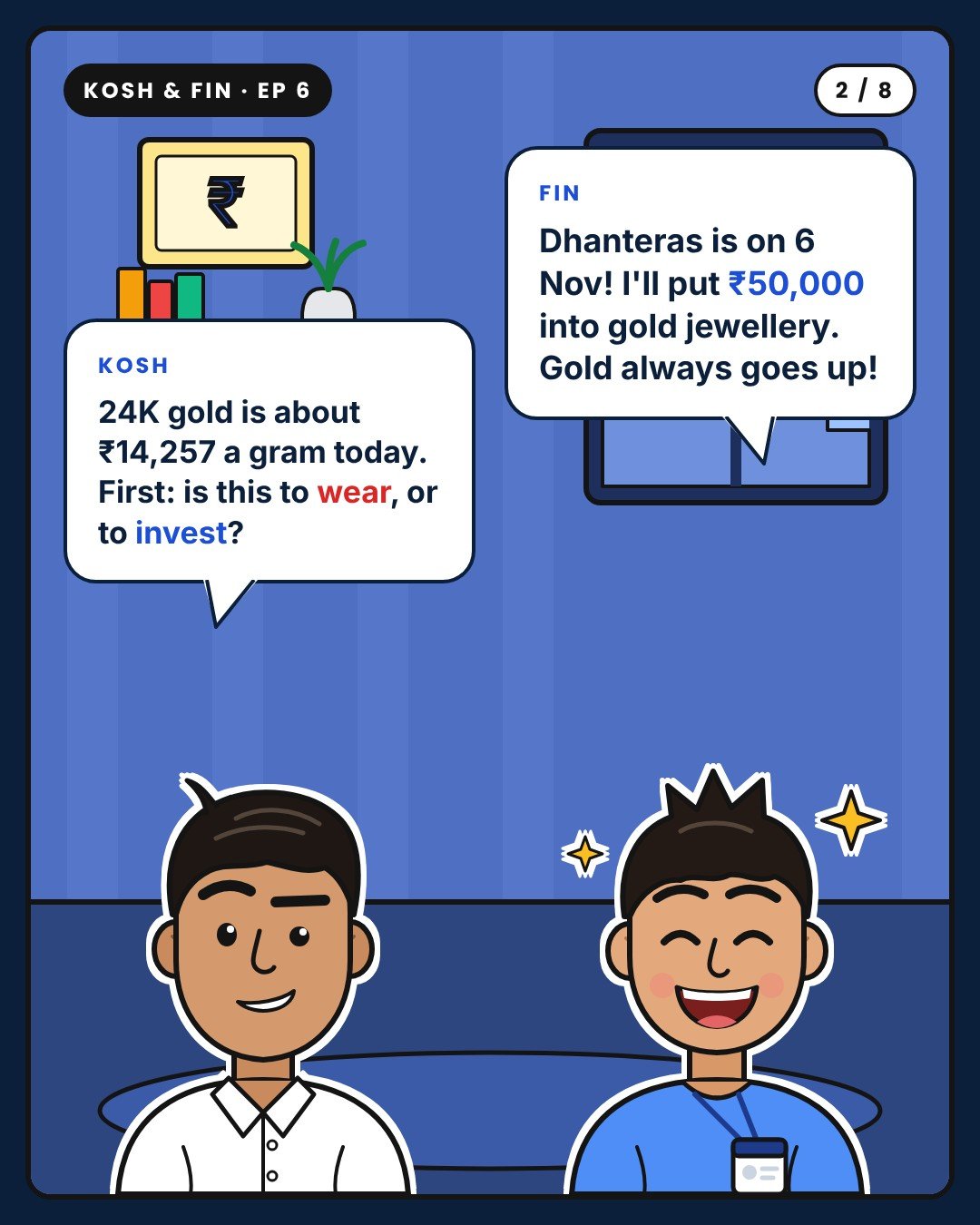
Dhanteras falls on 6 November 2026, and 24K gold is near ₹1.43 lakh per 10 g (26 October rates). Fin wants to put ₹50,000 into jewellery. Before he does, Kosh checks how much of that money actually turns into gold. Swipe through the comic, then read the full breakdown.
Swipe or use the arrows
Jewellery: lovely to wear, costly to invest in
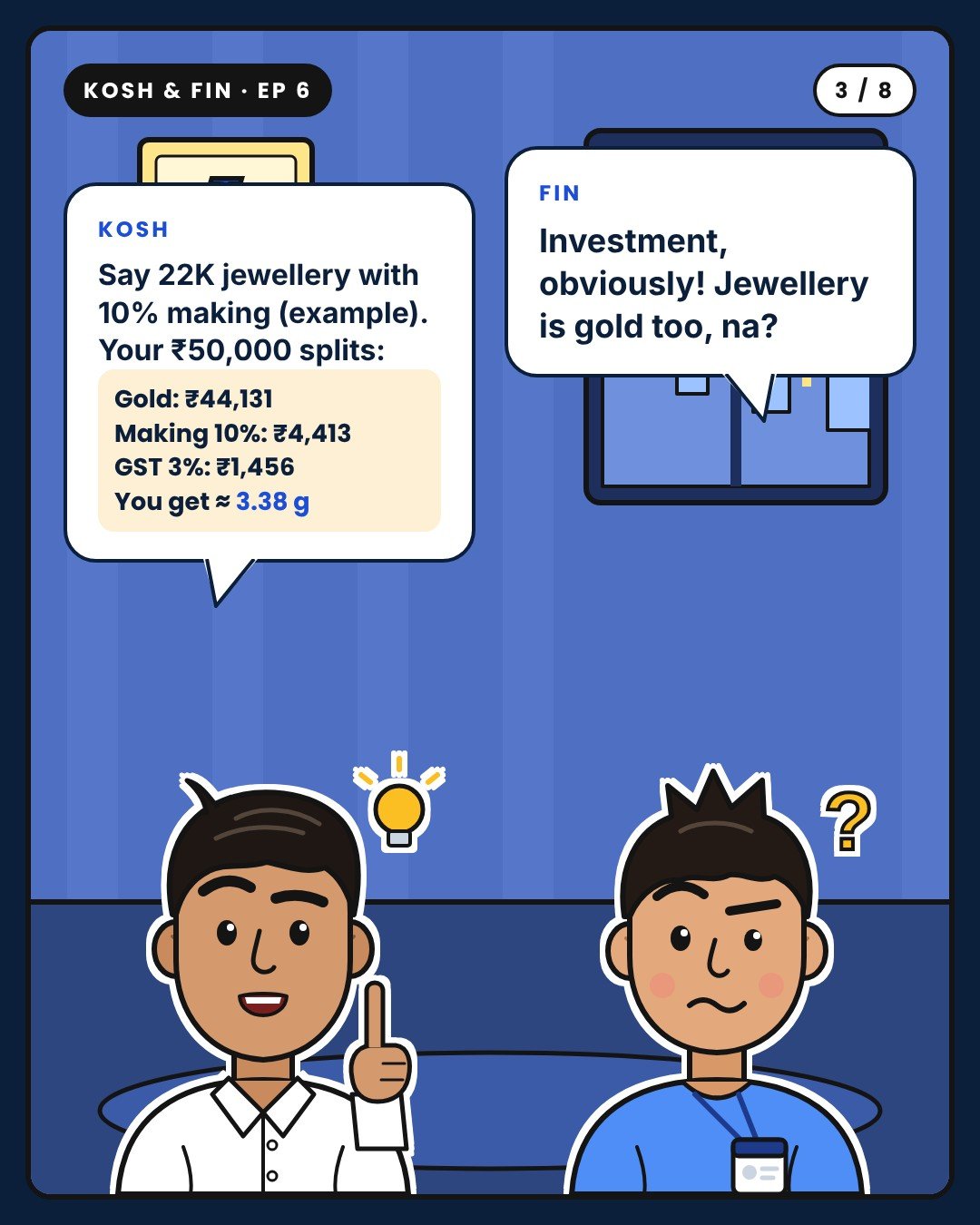
Say you spend ₹50,000 on 22K jewellery at about ₹13,069 a gram with 10% making charges (an illustration; making charges vary, so ask your jeweller). Roughly ₹44,131 is gold, ₹4,413 is making and ₹1,456 is 3% GST. You get about 3.38 g.
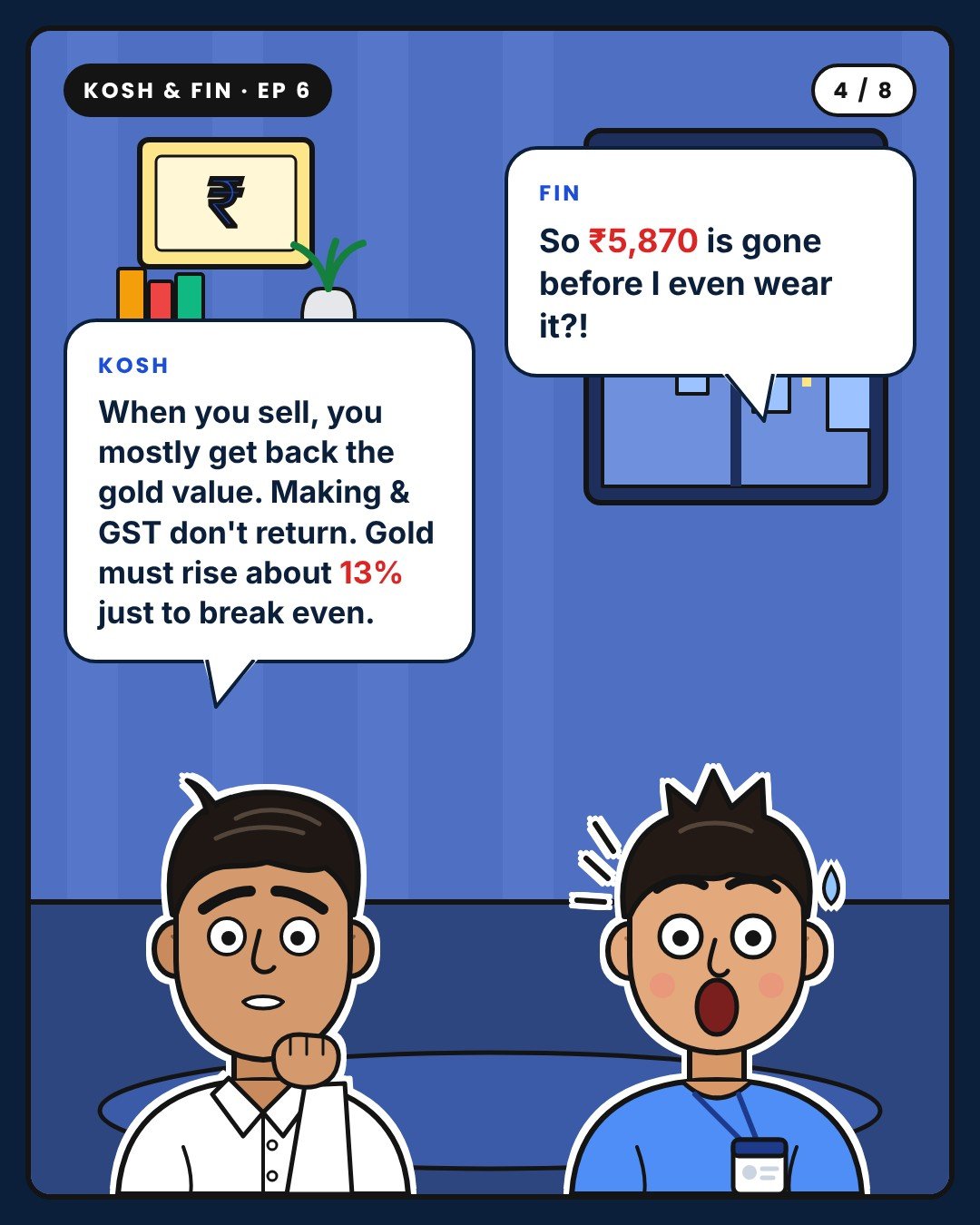
When you sell or exchange jewellery, you usually get back only the gold value. Making charges and GST don’t come back, so gold has to rise about 13% just for you to break even.
Gold coins and bars
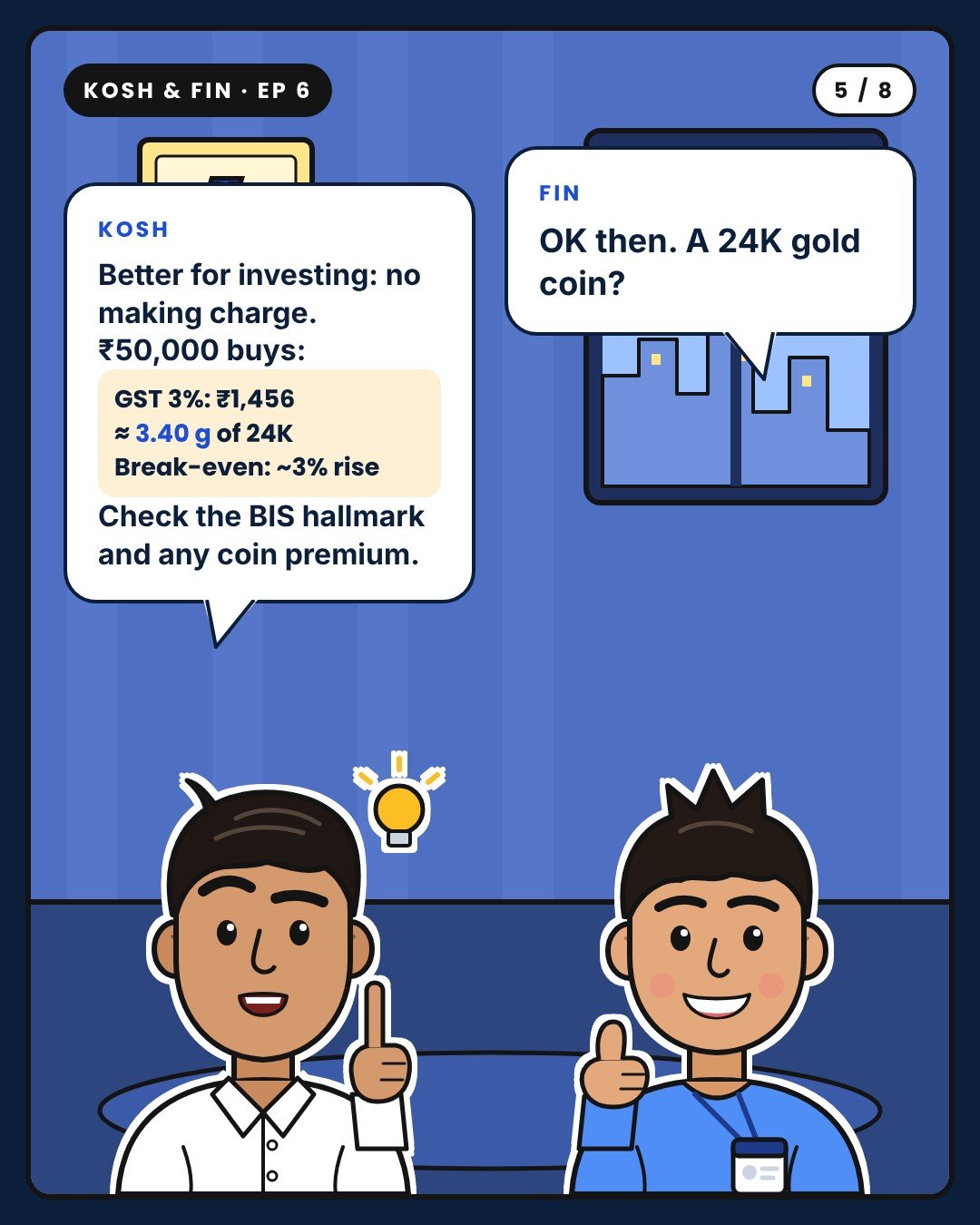
Coins and bars have no making charge in the usual sense, but you still pay 3% GST. ₹50,000 buys about 3.40 g of 24K gold at ₹14,257 a gram, so you need roughly a 3% rise to break even. Check for the BIS hallmark, ask whether there’s a coin premium, and plan for safe storage.
Digital gold
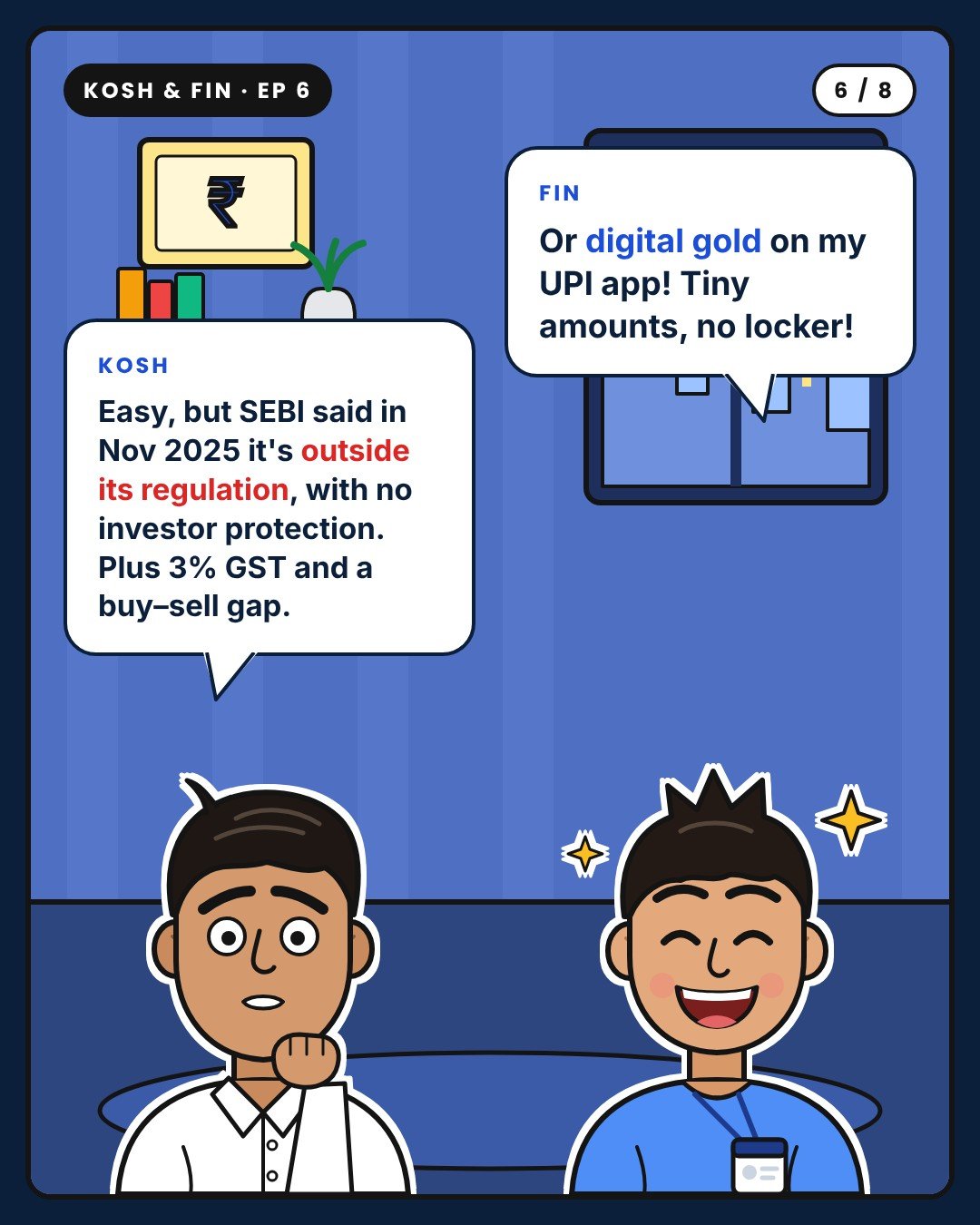
It’s easy and you can buy tiny amounts from a UPI or broking app. But SEBI cautioned on 8 November 2025 that digital gold products are outside its regulation, with no investor-protection mechanism if something goes wrong. You also pay 3% GST on purchase, plus the platform’s gap between buying and selling prices.
Gold ETFs and gold mutual funds (“paper gold”)
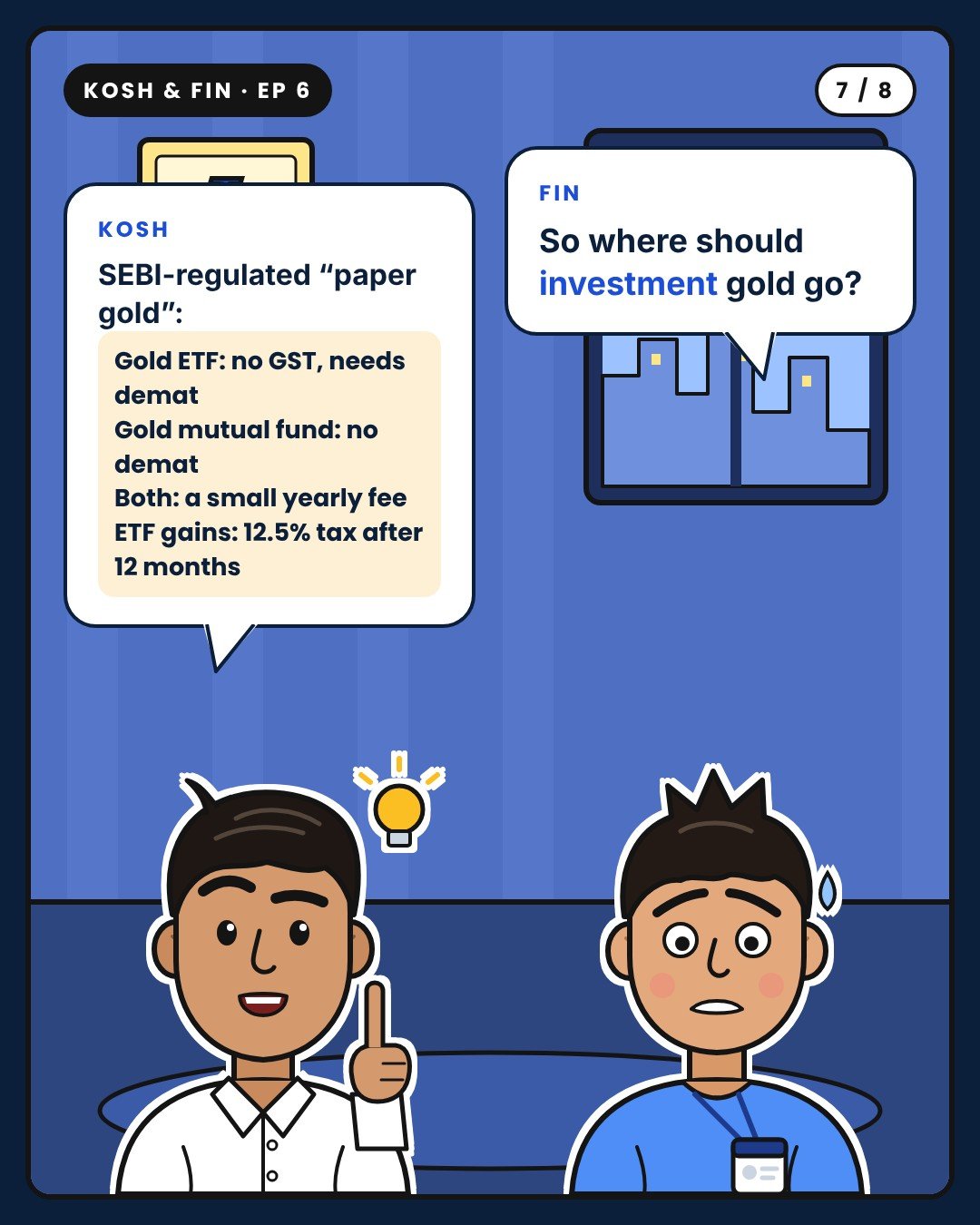
These are SEBI-regulated. There’s no GST on buying units; the fund charges a small yearly expense ratio that’s built into its price. Gold ETFs need a demat account; gold mutual funds (fund-of-funds) don’t.
Tax: gains on gold ETFs become long-term after 12 months and are taxed at 12.5%. Physical gold, digital gold and gold fund-of-funds become long-term after 24 months, also at 12.5%. Short-term gains are taxed at your slab rate. No new Sovereign Gold Bonds have been issued since February 2024; existing ones trade on exchanges. Estimate your tax with our income tax calculator.
A worked example: ₹50,000 on Dhanteras
| Option | Gold you get | Cost going in | Break-even |
|---|---|---|---|
| 22K jewellery (10% making) | ≈3.38 g | ≈₹5,870 making + GST | ≈13% rise |
| 24K coin | ≈3.40 g (24K) | ₹1,456 GST | ≈3% rise |
| Digital gold | Depends on platform | 3% GST + buy–sell spread | Not SEBI-regulated |
| Gold ETF / gold fund | Units tracking gold | No GST; small yearly fee | SEBI-regulated |
Prices as of 26 October 2026 and an illustrative 10% making charge. Actual rates, making charges and fees vary.
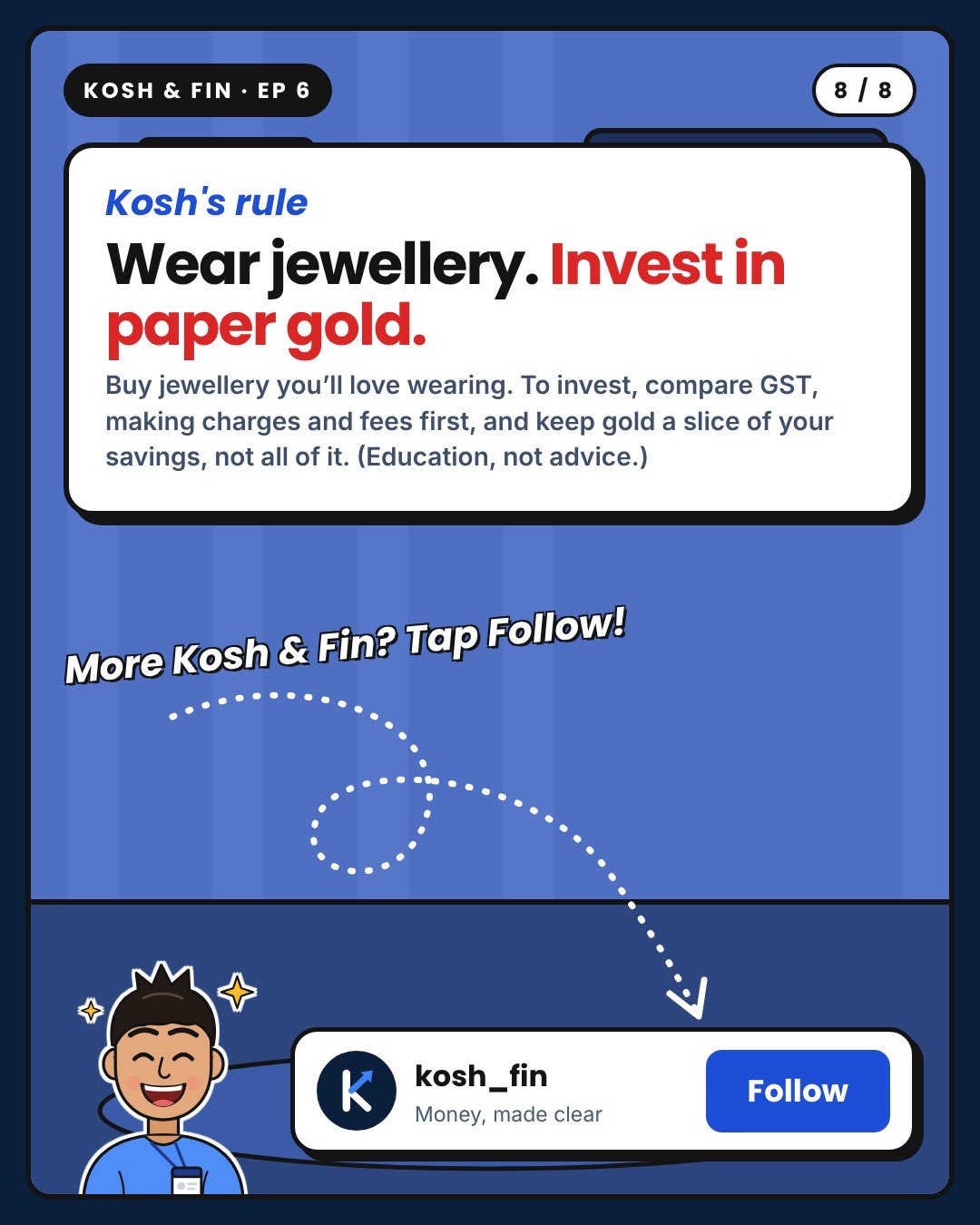
Buy jewellery you’ll love wearing. To invest, compare GST, making charges and fees first, and keep gold a slice of your savings, not all of it. (Education, not investment advice.)
Planning a savings goal for next Diwali? Try our savings calculator, or learn the basics on Koshfin Learn. Got a bonus too? Read Kosh & Fin Ep 5: Diwali bonus, blow it or grow it.
Frequently asked questions
Is digital gold regulated by SEBI?
No. SEBI’s November 2025 caution said digital gold products are outside its regulatory purview, so there is no SEBI investor-protection mechanism for them.
Is there GST on gold ETFs?
There is no GST on buying gold ETF units. The fund’s management fee carries GST, but that sits inside the expense ratio.
How is gold taxed in 2026?
Long-term gains are taxed at 12.5% without indexation: gold ETFs after 12 months; physical gold, digital gold and gold fund-of-funds after 24 months. Short-term gains are taxed at your slab rate.
Can I still buy new Sovereign Gold Bonds?
No new tranche has been issued since February 2024. Existing bonds can be bought and sold on stock exchanges.
Part of our Kosh & Fin visual stories. New ones every week on Instagram: @kosh_fin