

Banks love jargon. Here are the 12 credit card terms you’ll see most often, explained in plain English with a quick example for each.

Swipe or use the arrows
Fees
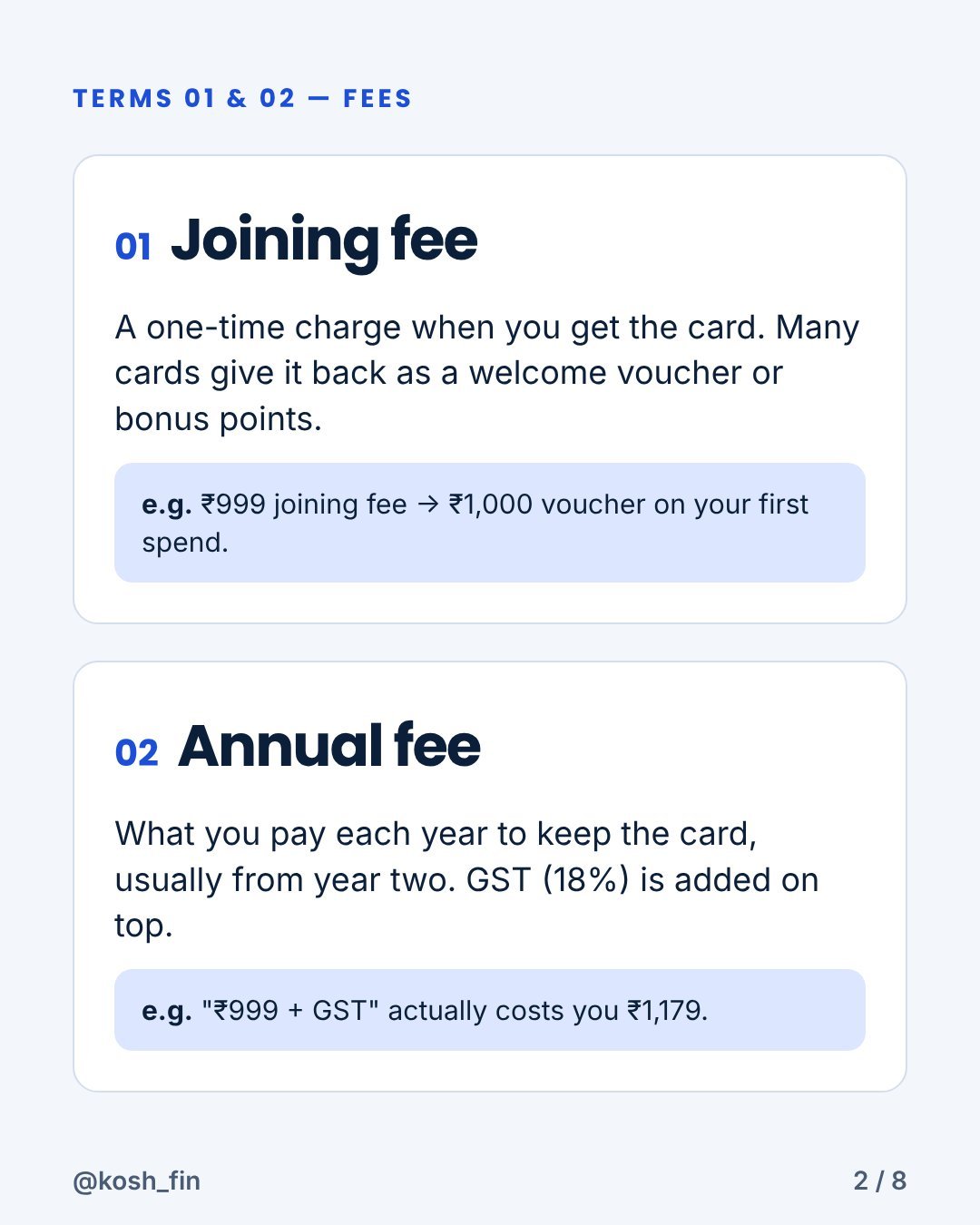
1. Joining fee: a one-time charge when you get the card. Many cards give it back as a welcome voucher or bonus points (e.g. ₹999 fee → ₹1,000 voucher).
2. Annual fee: what you pay each year to keep the card, usually from year two. 18% GST is added, so “₹999 + GST” actually costs ₹1,179.
Spend targets
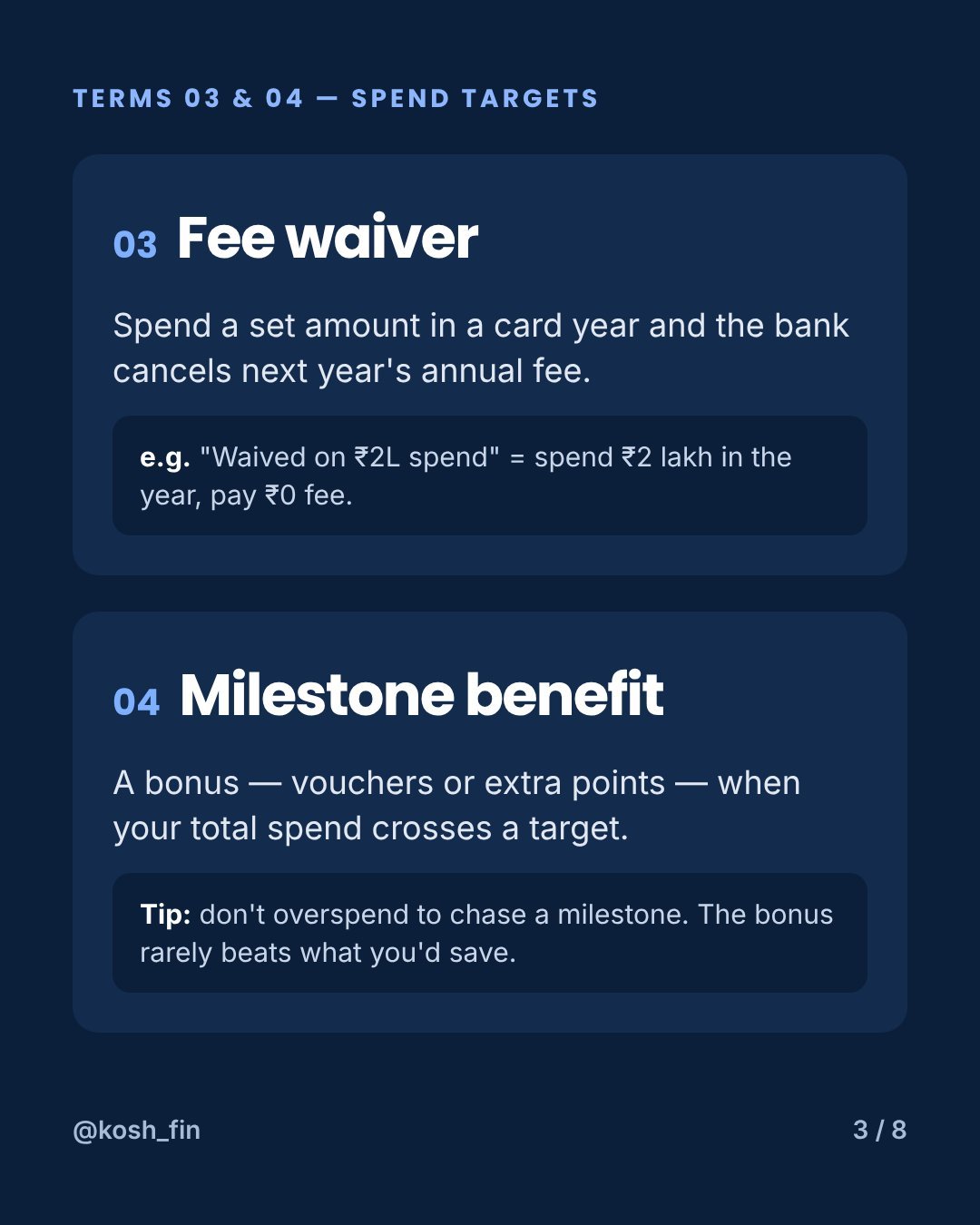
3. Fee waiver: spend a set amount in a card year and next year’s annual fee is cancelled (“waived on ₹2L spend” means spend ₹2 lakh, pay ₹0).
4. Milestone benefit: a bonus when your total spend crosses a target. Don’t overspend to chase one; the bonus rarely beats what you’d save.
Rewards
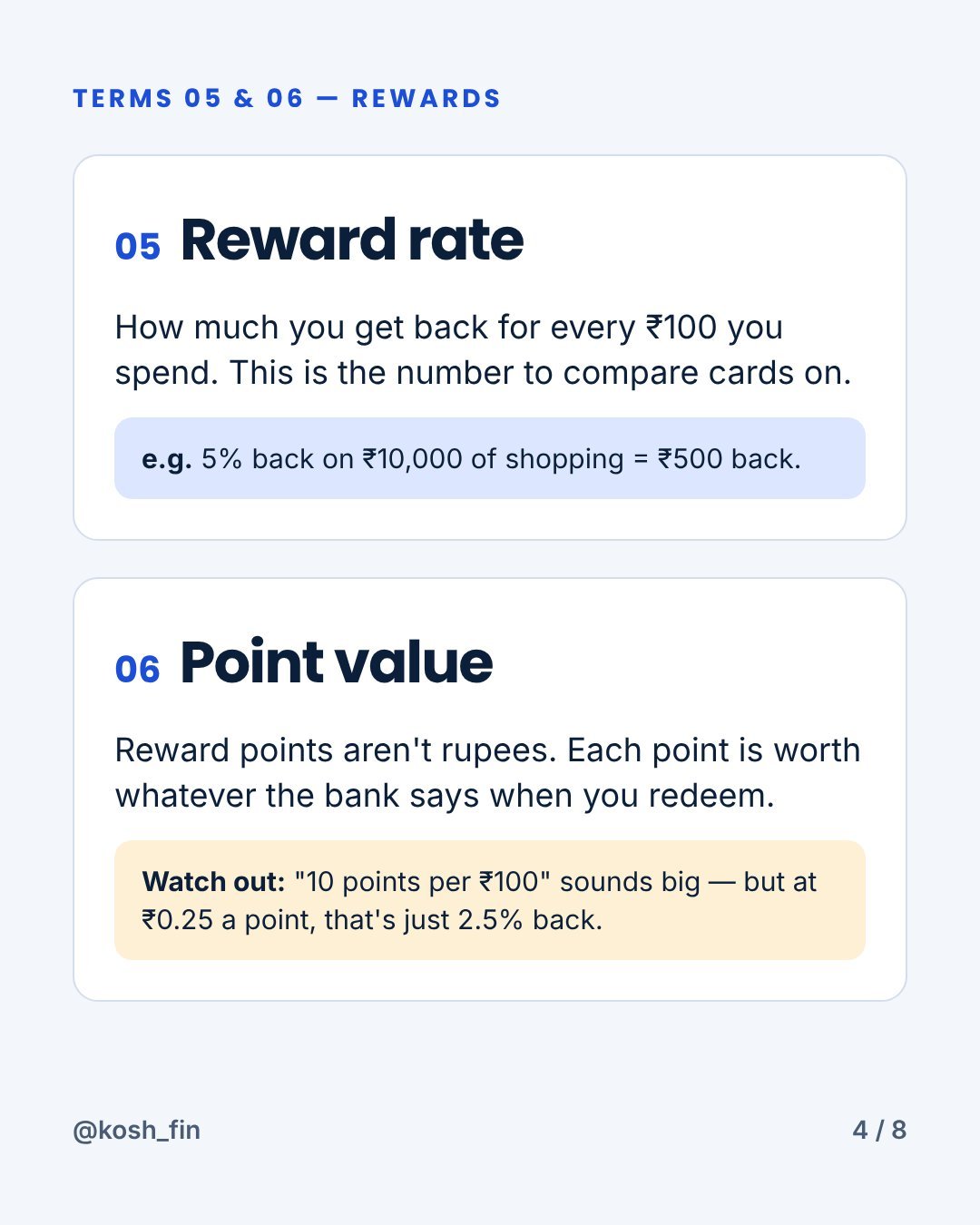
5. Reward rate: how much you get back for every ₹100 spent. This is the number to compare cards on (5% back on ₹10,000 = ₹500).
6. Point value: points aren’t rupees. “10 points per ₹100” sounds big, but at ₹0.25 a point that’s just 2.5% back.
The fine print
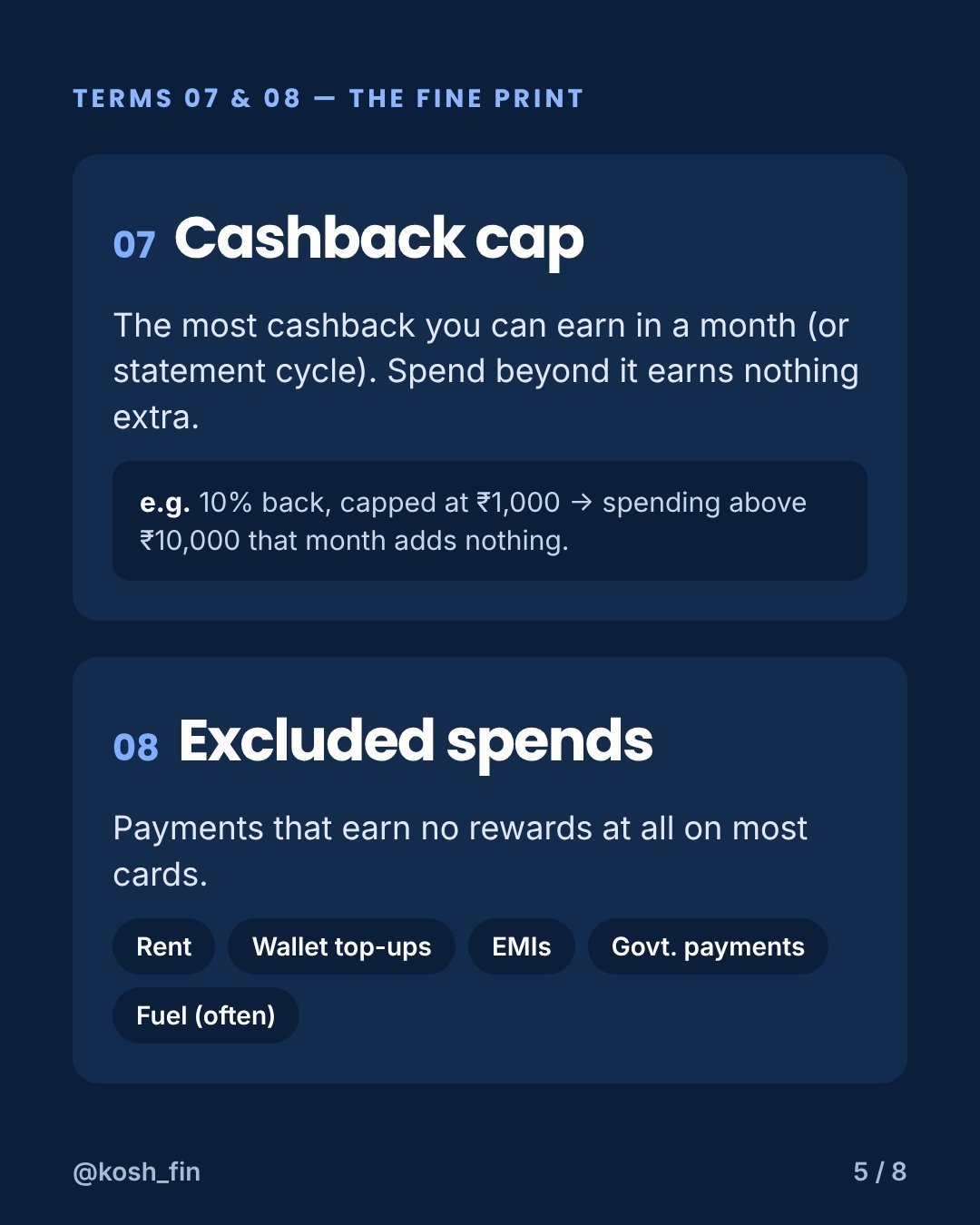
7. Cashback cap: the most you can earn in a month or statement cycle. With 10% back capped at ₹1,000, spending above ₹10,000 adds nothing.
8. Excluded spends: payments that earn no rewards on most cards, such as rent, wallet top-ups, EMIs, government payments and often fuel.
Your bill
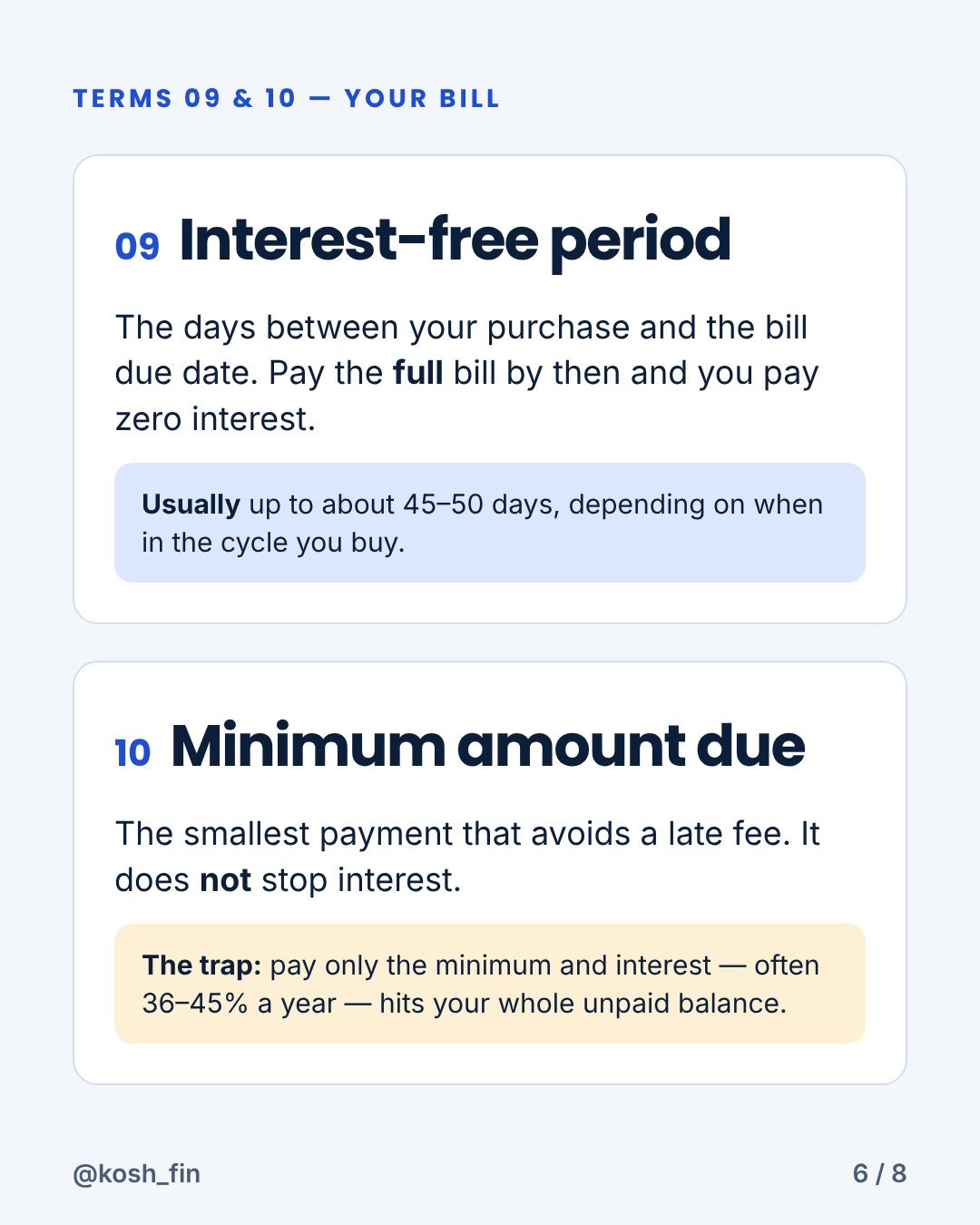
9. Interest-free period: the days between a purchase and the bill due date, usually up to about 45–50 days. Pay the full bill by then and you pay zero interest.
10. Minimum amount due: the smallest payment that avoids a late fee. It does not stop interest, which can run at 36–45% a year on your whole unpaid balance. See The Minimum Due Trap.
Your CIBIL score
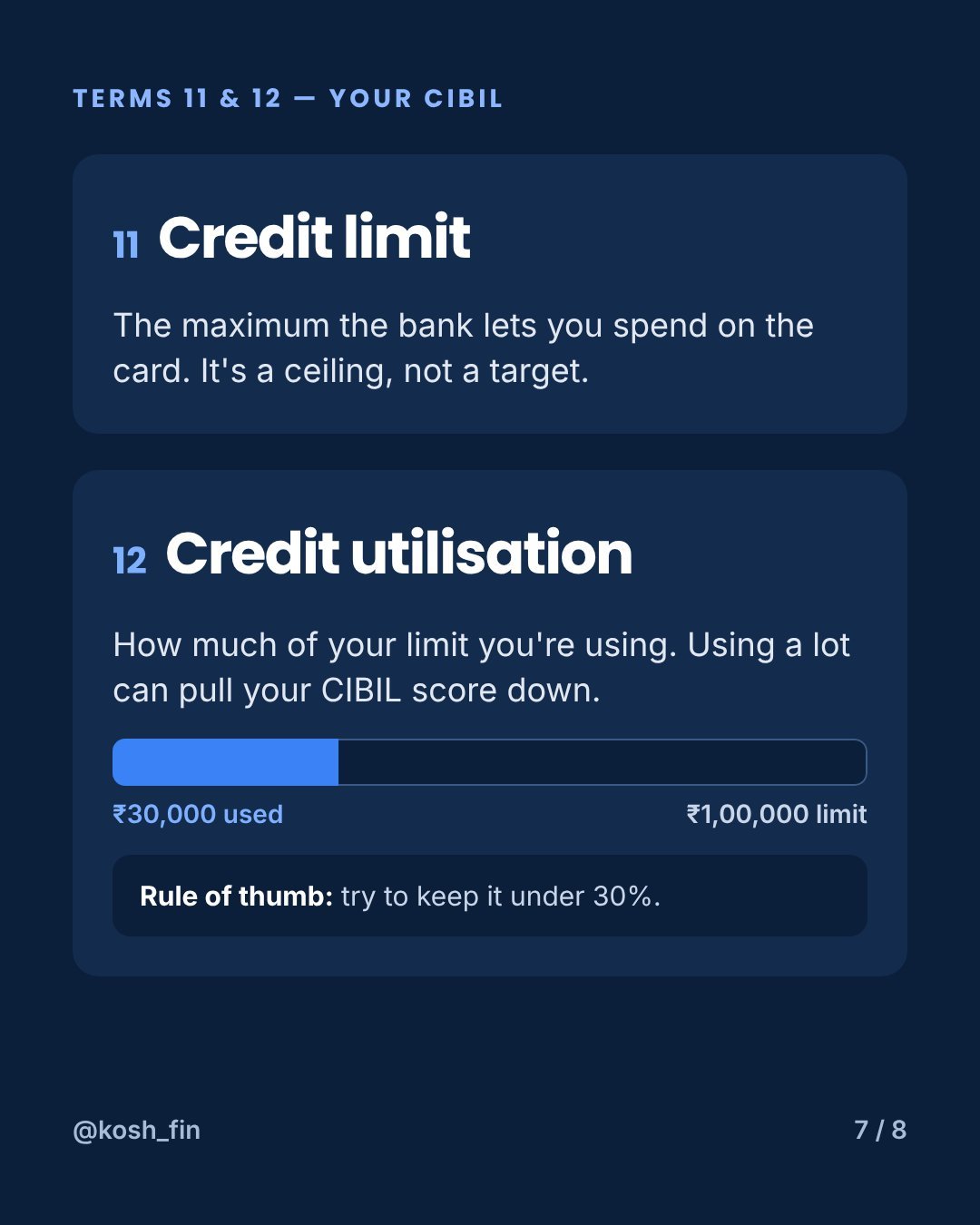
11. Credit limit: the maximum the bank lets you spend. It’s a ceiling, not a target.
12. Credit utilisation: how much of your limit you’re using. High utilisation can pull your CIBIL score down; try to stay under 30% (₹30,000 on a ₹1 lakh limit).
Ranked by what you’d actually earn.
Frequently asked questions
What is credit utilisation?
The share of your credit limit you are using. Keeping it under about 30% is generally better for your CIBIL score.
Does paying the minimum amount due stop interest?
No. It only avoids a late fee. Interest is charged on the entire unpaid balance.
How long is the interest-free period on a credit card?
Usually up to about 45–50 days, depending on when in the billing cycle you make the purchase.
Part of our Kosh & Fin visual stories. New ones every week on Instagram: @kosh_fin