

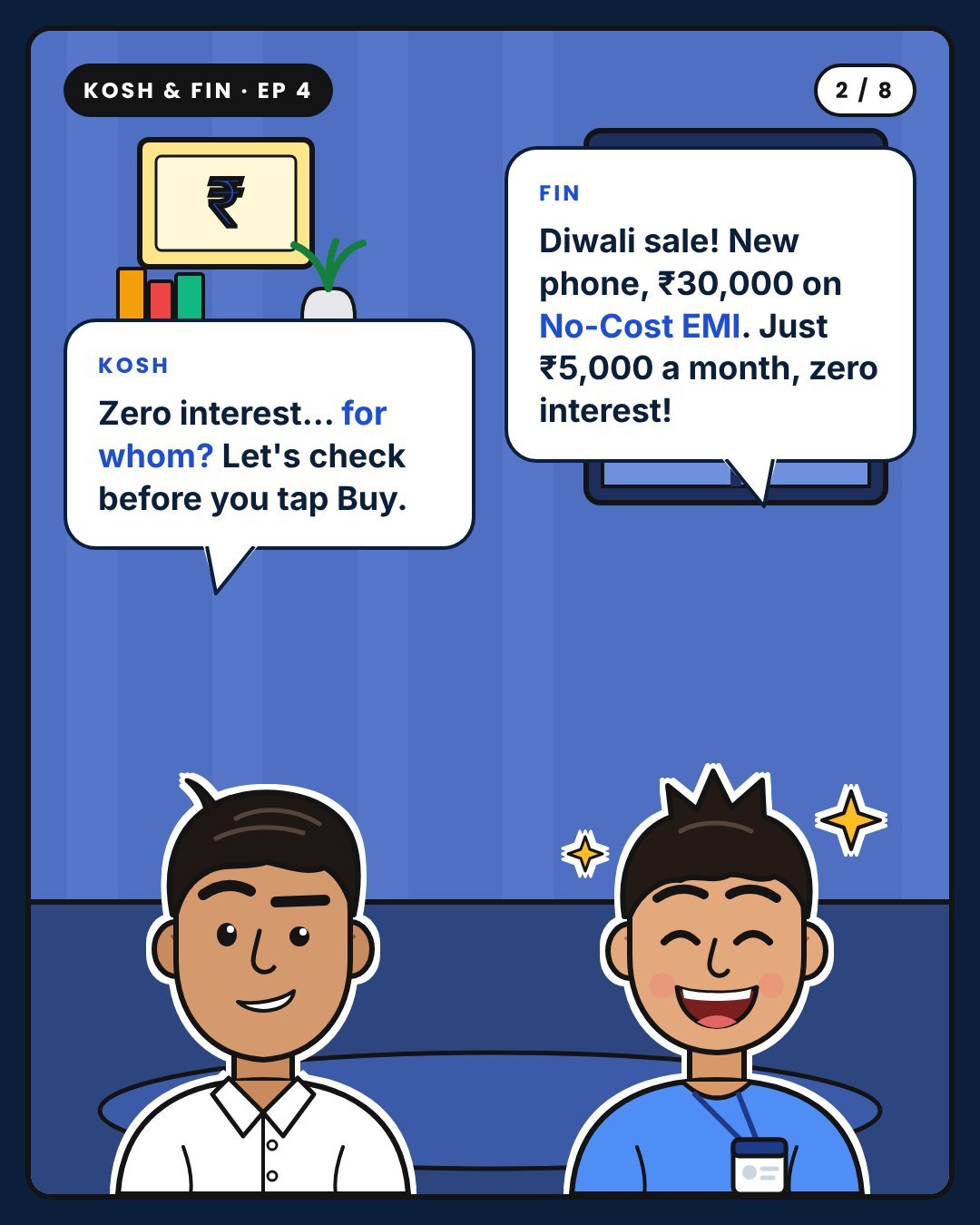
Festive sales are full of “No-Cost EMI” banners. Zero interest sounds like free money, but the real cost often hides in GST, fees and the discount you give up. Swipe through the comic, then read the full breakdown below.

Swipe or use the arrows
What “No-Cost EMI” actually means
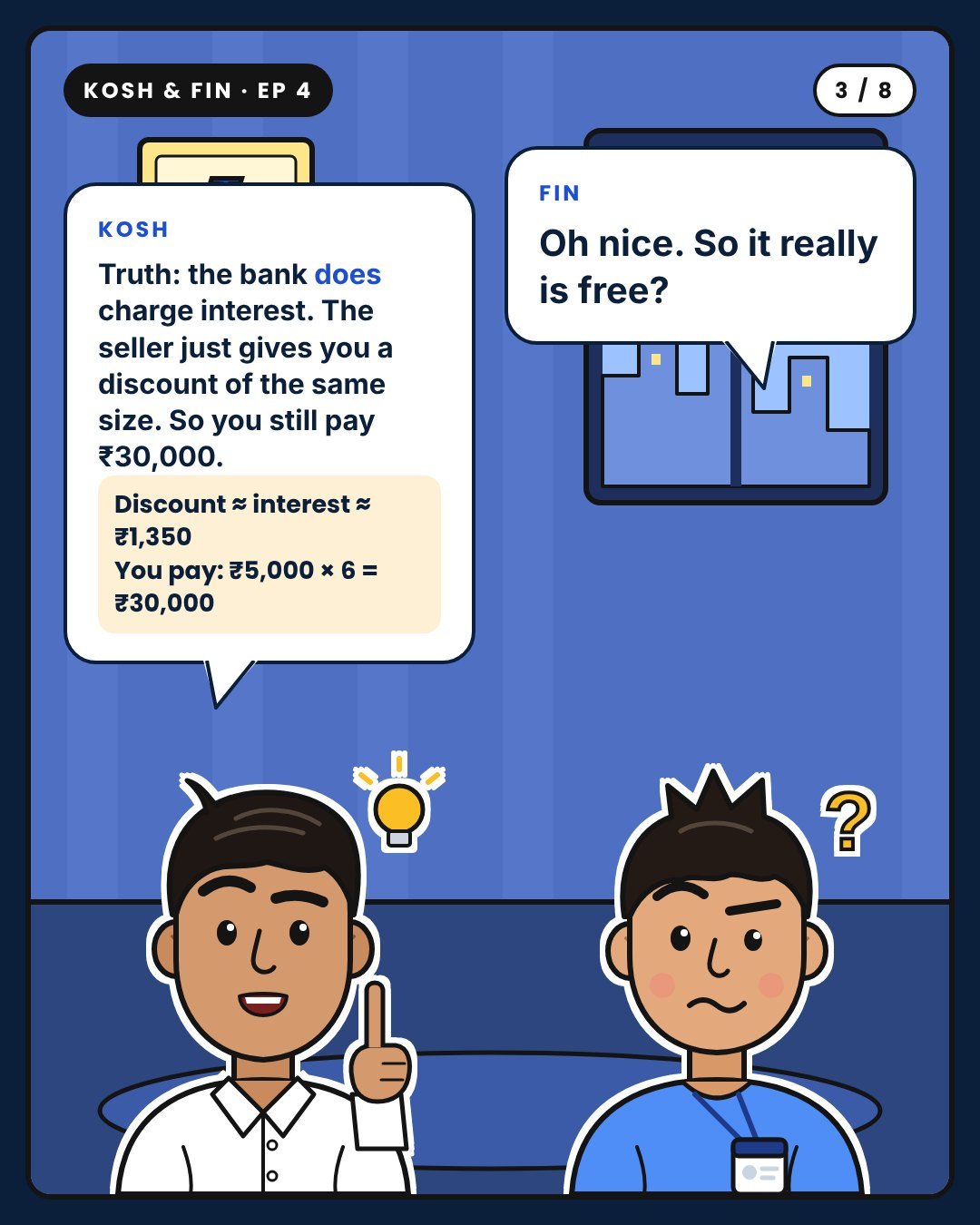
With a no-cost EMI, the bank still lends you money and still charges interest. What changes is that the seller (or brand) gives you an upfront discount roughly equal to that interest. The discount and the interest cancel out, so the total of your EMIs matches the sticker price.
Take a ₹30,000 phone on a 6-month no-cost EMI. The seller knocks about ₹1,350 off the price, the bank lends you the rest at its usual card rate, and you repay ₹5,000 a month. Six EMIs come to exactly ₹30,000. So far, it really is free. The cost comes from four other places.
The 4 hidden costs
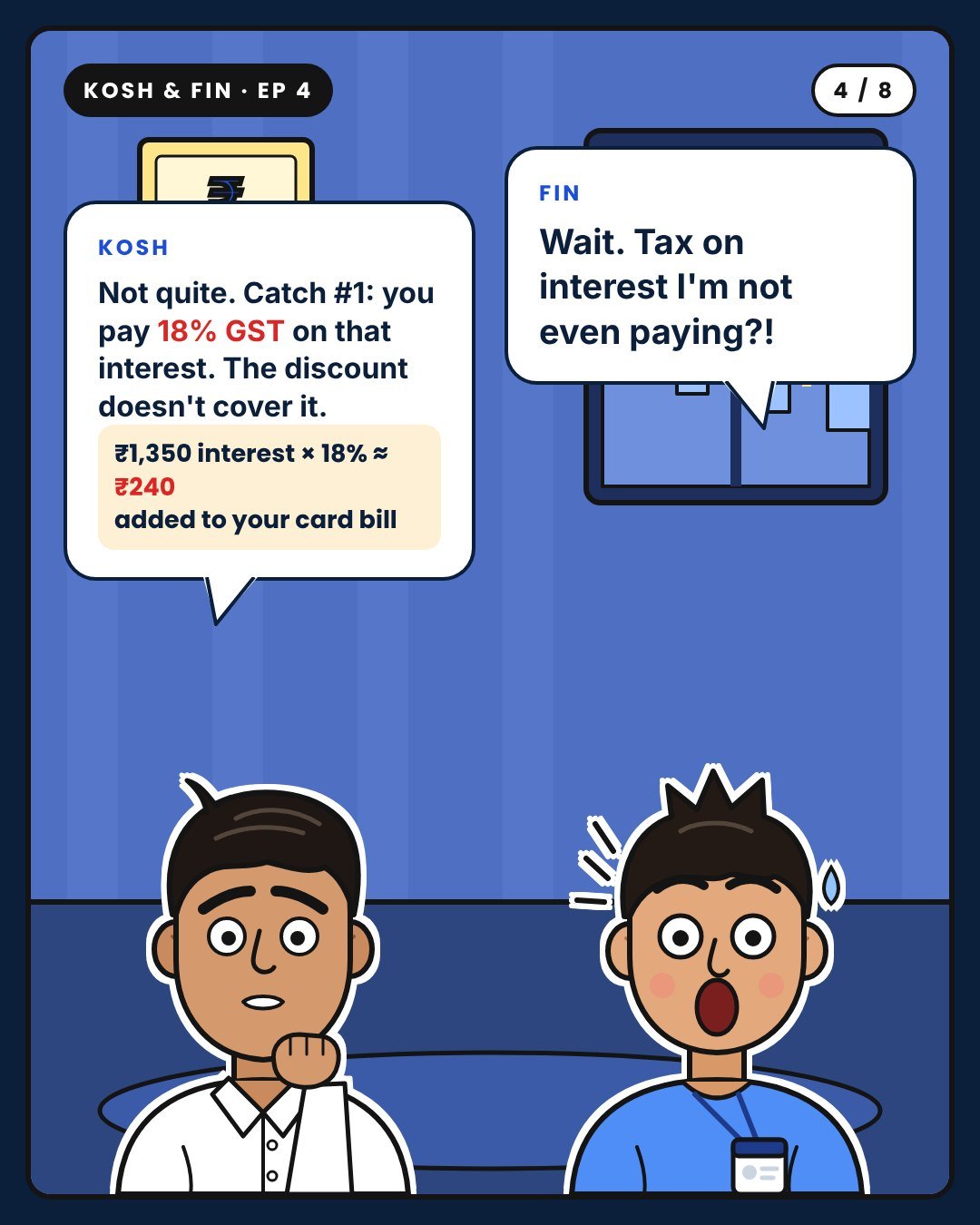
1. GST on the interest
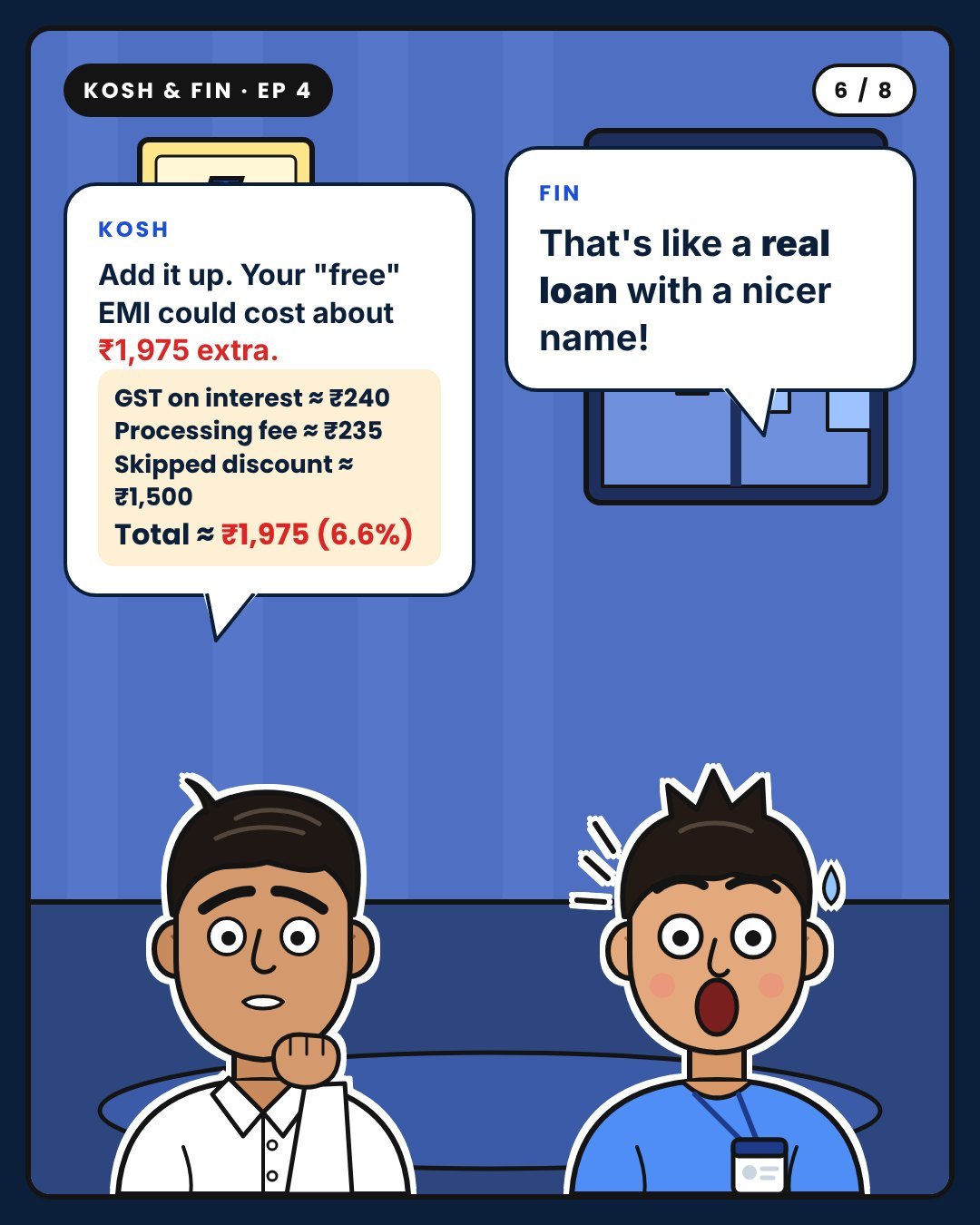
On credit card EMIs, the bank charges 18% GST on the interest part of every EMI. The seller’s discount covers the interest, but not this tax. On our example, ₹1,350 of interest × 18% ≈ ₹240 extra on your card bills.
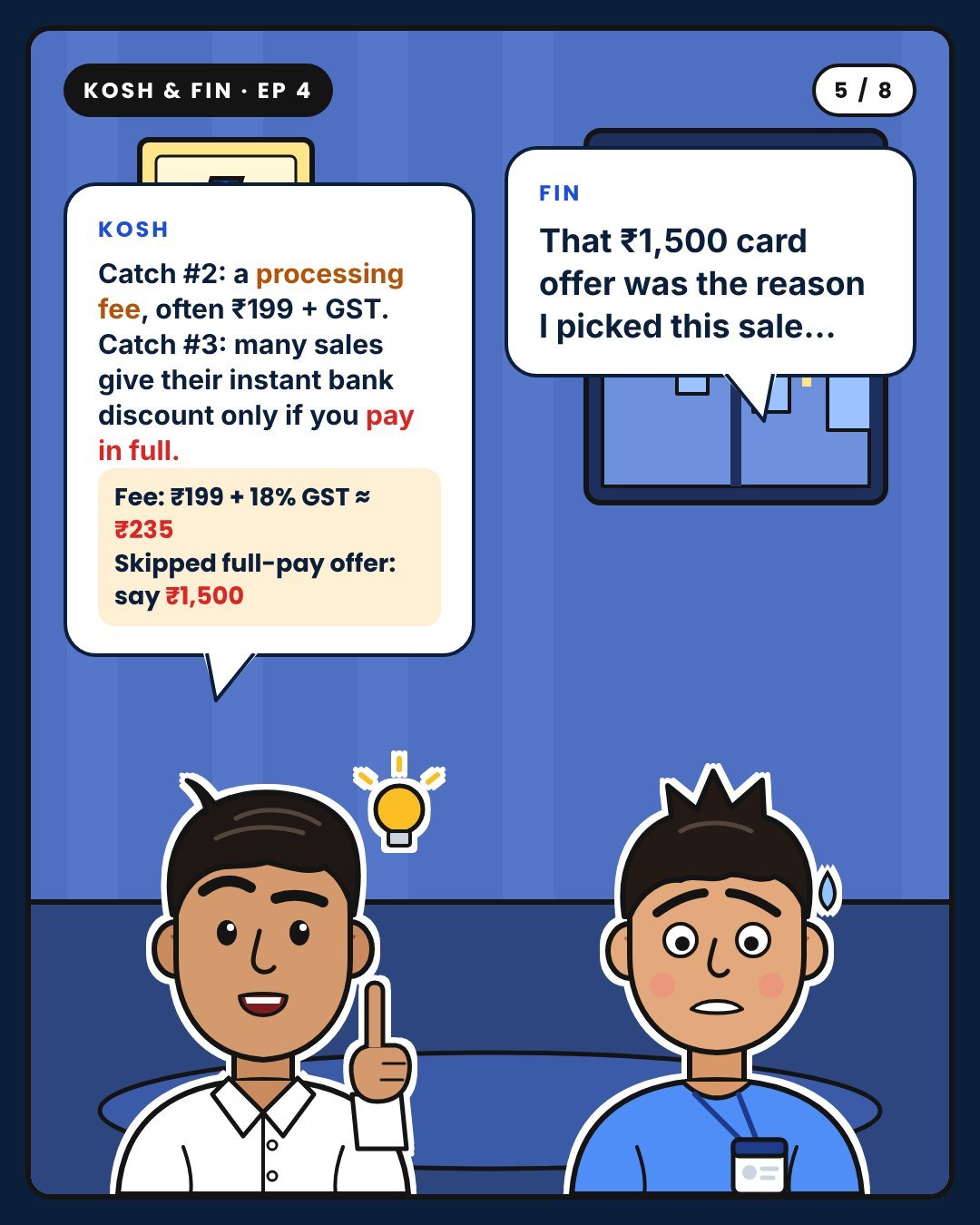
2. A processing fee
Many banks charge a one-time processing fee for converting a purchase to EMI, often ₹199 plus 18% GST, so about ₹235. Some festive offers waive it, so check the payment page before you confirm.
3. The discount you skip
Sales often advertise an instant bank discount (for example, 10% off up to ₹1,500) that applies only if you pay in full. Choose no-cost EMI and you may lose it. In our example, that’s ₹1,500 you didn’t save.
4. Your credit limit gets blocked
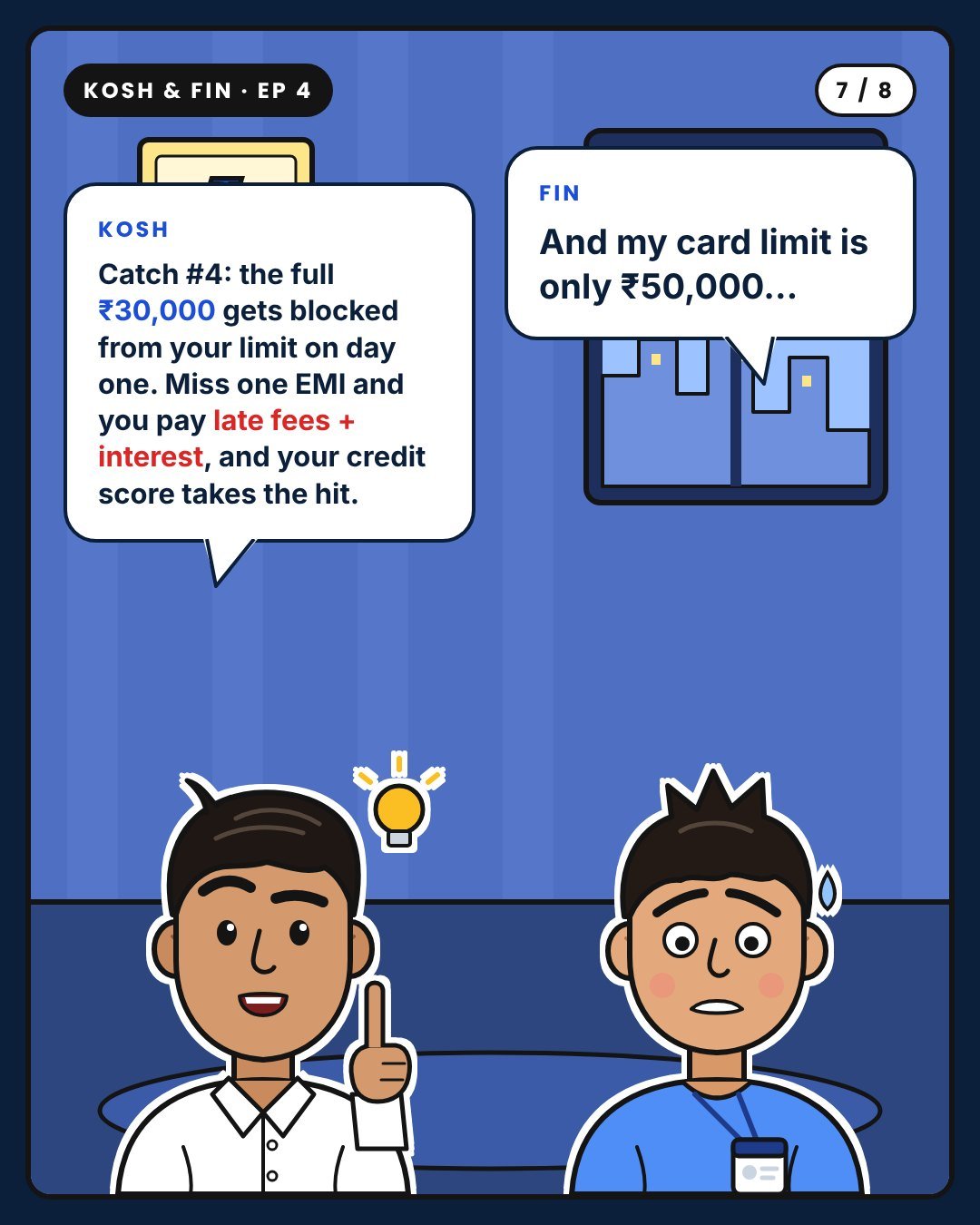
The full ₹30,000 is blocked from your card limit on day one and frees up only as you pay each EMI. On a ₹50,000 limit, that leaves just ₹20,000 for everything else, and high usage of your limit can pull your credit score down. Miss an EMI and you pay late fees and interest on top.
Add it up
| Cost | Approx. amount |
|---|---|
| GST on interest (18% of ≈ ₹1,350) | ₹240 |
| Processing fee (₹199 + GST) | ₹235 |
| Full-payment discount you gave up | ₹1,500 |
| Extra cost of the “free” EMI | ≈ ₹1,975 (6.6%) |
Example figures for a ₹30,000 purchase over 6 months, assuming a bank interest rate of about 16% a year. Your bank, fee and sale offer may differ.
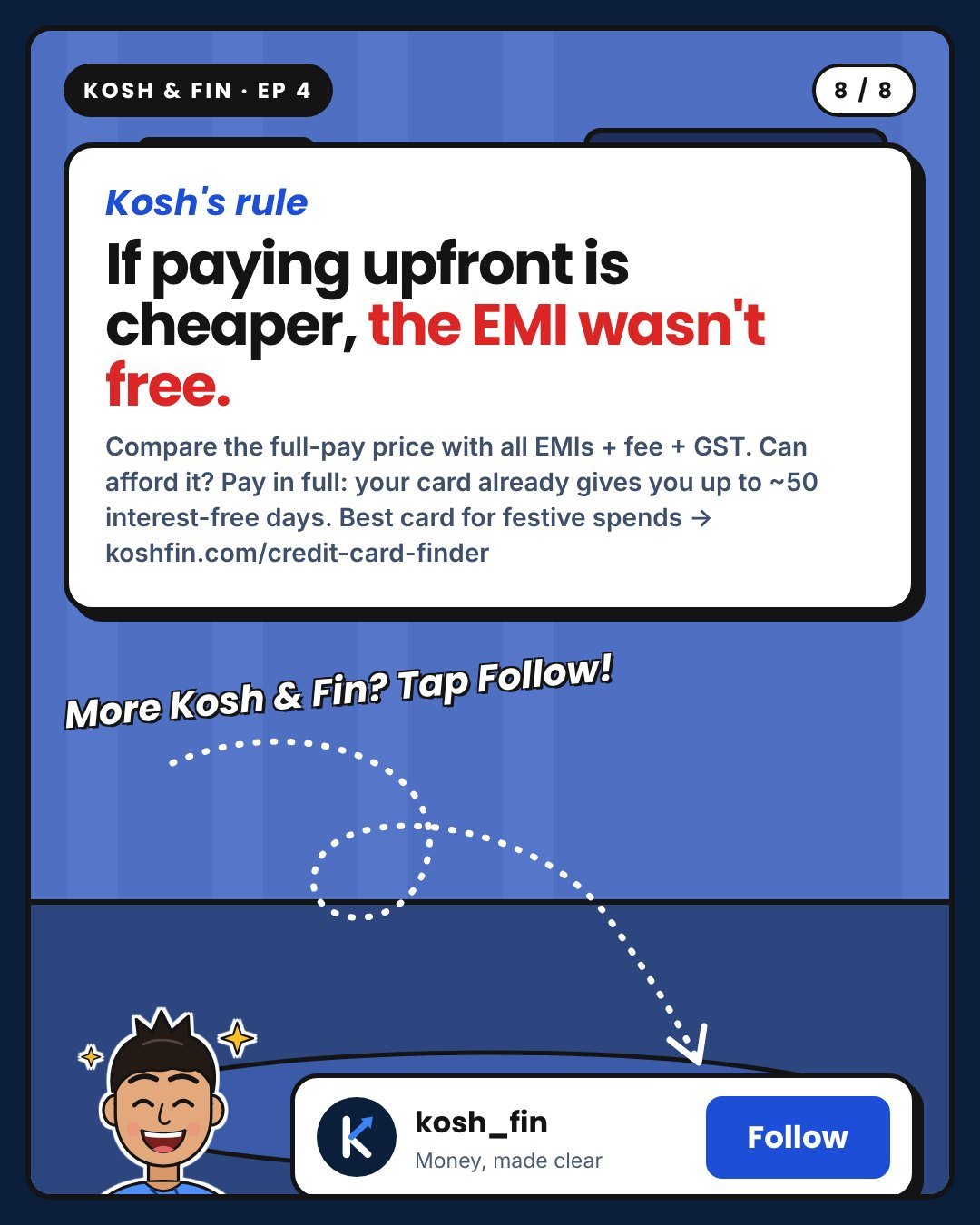
Compare the full-payment price with the total of all EMIs + processing fee + GST. If you can afford it, pay in full: your credit card already gives you up to about 50 interest-free days.
When a no-cost EMI does make sense
- There’s no processing fee, or it’s waived for the sale.
- You don’t lose any discount by choosing EMI over full payment.
- You were going to buy it anyway, and spreading the payment keeps your emergency fund intact.
- The EMI fits comfortably in your monthly budget, and your limit has room to spare.
A 30-second checklist before you tap “Buy”
- Note the price if you pay in full, including any instant bank discount.
- Note the EMI total, then add the processing fee + GST.
- Add about 18% of the interest amount (shown in your bank’s EMI breakdown) for GST.
- Pick whichever total is lower.
Want to understand the maths behind EMIs? Read how EMI is calculated and flat vs reducing interest rates.
Find the card that earns you the most on festive spends.
Frequently asked questions
Is no-cost EMI really interest-free?
No. The bank charges interest as usual, but the seller gives you a discount of about the same amount, so the interest is cancelled out. You still pay GST on that interest and any processing fee.
How much GST is charged on a credit card EMI?
18% GST is charged on the interest part of each EMI, and on any processing fee. On a ₹30,000, 6-month no-cost EMI, that’s roughly ₹240 of GST on interest.
Does no-cost EMI affect my credit score?
It can. The full purchase amount is blocked from your credit limit, which raises your credit usage. Missing an EMI hurts your score and adds late fees and interest.
Is it better to pay in full or take a no-cost EMI?
Compare the two totals. If paying in full gets you an instant discount, or the EMI has a processing fee, paying upfront is usually cheaper. If there’s no fee and no lost discount, a no-cost EMI can work.
Sources: Capitalmind · Jupiter · Business Today. For information only, not financial advice. Always check your bank’s EMI terms before converting a purchase.
More Kosh & Fin every week on Instagram: @kosh_fin